
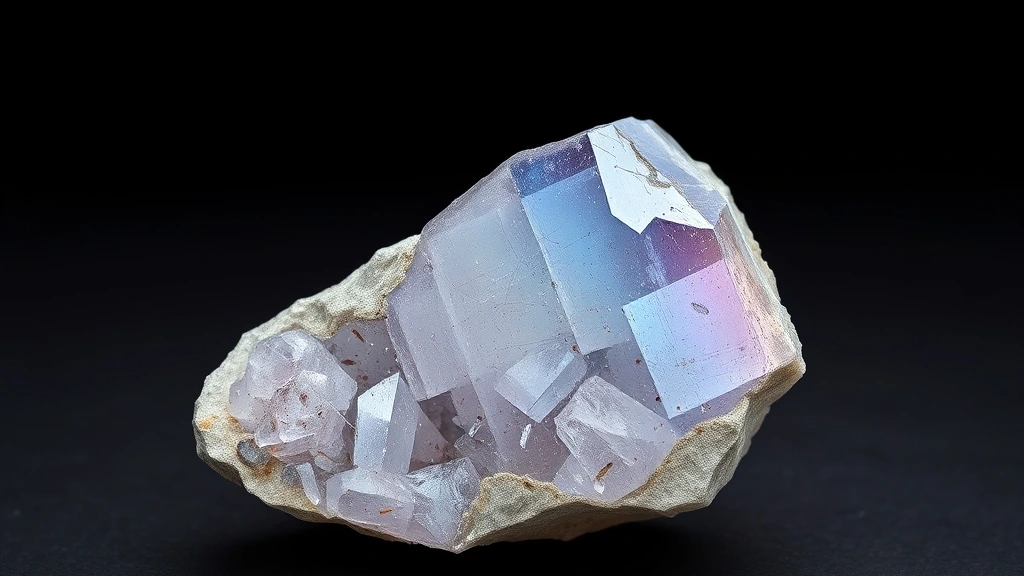
Titanium Aura Quartz belongs to the vast Tectosilicate family, specifically within the Quartz Group. This classification places it among the most abundant and geologically significant minerals on Earth. The stone’s identity is defined by its silica framework, which provides exceptional structural stability. Unlike natural inclusions, the aura is an artificial enhancement applied to the crystal surface. This process transforms standard clear quartz into a visually striking gemstone with unique optical properties.
What is Titanium Aura Quartz? Geological Overview & Definition
Titanium Aura Quartz is not a naturally occurring variety but a lab-enhanced form of clear quartz. The base mineral is α-quartz, which undergoes a specialized coating process to develop its characteristic metallic luster. This technique involves applying a thin layer of titanium dioxide or similar compounds to the crystal surface. The result is a durable, iridescent finish that mimics the appearance of natural labradorite or fire opal.
The term “aura” refers to the thin-film interference effect created by the coating. This optical phenomenon produces a rainbow-like sheen that shifts depending on the viewing angle. The underlying quartz remains pure silicon dioxide, ensuring the gemstone retains its high clarity and brilliance. Collectors value this stone for its consistent color distribution and enhanced aesthetic appeal compared to untreated specimens. While the titanium variant displays cool metallic hues, its warmer counterpart, Rose Aura Quartz, offers a soft pinkish-gold shimmer that appeals to those seeking a more delicate aesthetic.
Titanium Aura Quartz Chemical Composition & Crystallographic Properties
The fundamental crystal structure of Titanium Aura Quartz is Trigonal, specifically exhibiting Rhombohedral or Trapezohedral habits. This lattice arrangement dictates the mineral’s cleavage and fracture patterns, which are characteristic of the quartz group. The hexagonal appearance often seen in raw crystals is a misinterpretation of the trigonal symmetry. Understanding this distinction is crucial for accurate mineralogical identification and classification. While the trigonal lattice of Titanium Aura Quartz defines its structural integrity, the visual complexity of its metallic coating shares a similar ethereal, light-refracting quality with the iridescent surface of an Aurora Borealis Crystal.
The chemical composition remains strictly SiO₂, with no significant cation substitution in the base crystal. The colorful aura is an exogenous coating that does not alter the internal stoichiometry of the quartz. This surface layer is chemically distinct from the host mineral, creating a composite material. The coating’s thickness and composition determine the specific hue observed, such as titanium blue or gold.
The mineral exhibits high chemical inertness to most acids, inheriting the resistance of pure quartz. However, the metallic coating may be susceptible to abrasion or harsh chemical cleaning agents. Proper care is required to preserve the integrity of the thin-film layer. Thermal behavior is stable up to high temperatures, though extreme heat could potentially degrade the surface coating.
The refractive index of the base quartz ranges from 1.544 to 1.553, contributing to its high brilliance. The added coating modifies the surface reflectivity, enhancing the perceived luster without changing the core optical properties. This combination of natural hardness and artificial coloration makes it a popular choice in modern jewelry design. The density remains approximately 2.65 g/cm³, consistent with standard quartz varieties.
| Property | Specification |
|---|---|
| Mineral Group | Silicates (Tectosilicates / Quartz Group) |
| Chemical Formula | SiO₂ (Silicon Dioxide) |
| Mohs Hardness | 7.0 |
| Crystal System | Trigonal (Rhombohedral / Trapezohedral) |
| Specific Gravity (Density) | 2.65 |
| Refractive Index | 1.544 – 1.553 |
| Color & Optical Properties | Natural Titanium Aura Quartz color spectrum and optical dispersion |
| Primary Mining Localities | Brazil, Madagascar, USA (Arkansas), Swiss Alps |
| Water & Chemical Resistance | High (Fully resistant to water and moisture) |
| Chakra Alignment (Traditional) | All Chakras (Universal Harmonizer) |
| Zodiac Affinity (Traditional) | All Zodiac Signs (Especially Leo and Aries) |
| Symbolic Meaning (Traditional) | Master energy amplifier, clarity, purification, and focus |
Titanium Aura Quartz Varieties & Color Spectrum
Titanium Aura Quartz displays distinct mineralogical characteristics across its geological varieties and structural habits. Gemologists evaluate these natural varieties based on crystal habit, trace chromophore concentrations, and visual luster.
Primary Natural Titanium Aura Quartz
The benchmark natural variety exhibiting diagnostic color saturation and classic crystallographic symmetry.
Distinct Geological Morphs of Titanium Aura Quartz
Secondary regional and structural varieties formed under localized geological temperature and pressure conditions.
Classic Titanium Aura Quartz
This variety exhibits a subtle titanium‑induced iridescence that ranges from pale blue to soft violet. Formed in quartz‑rich pegmatites, it often contains fine‑scale inclusions of mica and feldspar, giving a delicate lattice effect. Its rarity stems from the precise titanium concentration required, making it a prized specimen among collectors.
Blue‑Titanium Aura Quartz
Blue‑Titanium Aura Quartz displays a deeper azure hue, produced by trace amounts of titanium incorporated into the quartz lattice and trace iron, rather than by any post‑formation coating. The crystal habit is typically well‑formed hexagonal prisms with occasional fracture patterns. Its scarcity is heightened by limited deposits in specific South American pegmatites, where the mineral’s color is most vivid.
Purple‑Titanium Aura Quartz
This variant shows a rich violet tint, a result of titanium combined with minor vanadium. The quartz crystals often contain banded inclusions of tourmaline, creating a striking visual contrast. Due to its limited geographic distribution in Australian quartz veins, it remains a coveted trade variety.
Green‑Titanium Aura Quartz
Green‑Titanium Aura Quartz presents a subtle mossy hue, caused by a titanium dioxide coating that imparts a greenish tint during the treatment process. The crystals typically display fibrous inclusions of chlorite, giving a textured appearance. Its rarity is linked to the narrow range of chromite‑bearing pegmatites where the green tint develops.
Black‑Titanium Aura Quartz
This rare form shows a deep, almost black coloration, resulting from high titanium and iron concentrations. The quartz often contains graphite inclusions, adding a metallic sheen. Its scarcity is due to the uncommon combination of titanium and iron in specific African pegmatites.
White‑Titanium Aura Quartz
White‑Titanium Aura Quartz is characterized by a pristine, milky appearance with subtle iridescence. The mineral typically forms in quartz veins with minimal impurities, leading to a clear visual signature. Its rarity is attributed to the limited number of deposits where titanium is present without significant iron or manganese.
Where is Titanium Aura Quartz Found? Geological Mining & Extraction
Titanium Aura Quartz is predominantly sourced from pegmatitic formations, where slow cooling allows large quartz crystals to incorporate trace titanium. Major mining regions include the Carajás Basin in Brazil, the Jabalpur district in India, and the Yilgarn Craton in Western Australia, each offering distinct color morphs due to local geochemical conditions.
Extraction involves careful crushing and flotation to separate quartz from surrounding feldspar and mica. The resulting concentrate is then sorted by color and clarity, with high‑grade specimens often sold through specialized lapidary dealers worldwide.
Historical Significance & Cultural Lore of Titanium Aura Quartz
Across ancient Greco‑Roman lapidary traditions, quartz was valued for its clarity and believed to amplify divine energy. Egyptian artisans incorporated quartz into amulets, attributing protective qualities to its shimmering facets. In Vedic lore, quartz was associated with the Soma ritual, symbolizing purity and spiritual focus. Chinese geomancers also revered quartz for its supposed ability to harmonize the qi flow within a space, using it in architectural ornamentation and personal talismans.
Modern Uses & Jewelry Applications of Titanium Aura Quartz
Lapidaries value this gemstone for its vibrant, metallic sheen, which is achieved through a specialized ion implantation process that deposits titanium atoms onto the quartz surface. This treatment creates a thin, durable oxide layer that produces iridescent colors without compromising the underlying crystal structure. The resulting material retains the durability of natural quartz while offering unique aesthetic properties unavailable in untreated specimens.
- Faceted Cutting: Standard brilliant and mixed cuts maximize the play-of-color, enhancing the metallic luster under direct light.
- Cabochon Polishing: Smooth, domed surfaces are ideal for showcasing the broad, sweeping bands of titanium-induced iridescence.
- Ornamental Carving: Due to its Mohs hardness of 7, the stone can be intricately carved into beads, pendants, and decorative inlays.
- Mixed Media Jewelry: Often paired with silver or white gold to complement the cool, metallic tones of the aura.
Metaphysical Properties & Traditional Meaning of Titanium Aura Quartz
According to historical traditions and metaphysical lore, quartz has long been revered as a powerful conduit for spiritual energy and mental clarity. While the specific titanium aura is a modern phenomenon, practitioners extend the ancient reverence for clear quartz to this enhanced variety. It is believed to amplify the wearer’s intent and facilitate a state of heightened awareness during meditation or contemplative practices.
In universal lapidary lore, this stone is associated with purification and the removal of energetic blockages. It is often described as a master energy amplifier, capable of balancing the body’s subtle energy fields. Users report a sense of emotional resonance, feeling grounded yet expansive, which supports focus and mental clarity during challenging life transitions.
Which Chakra and Zodiac Signs Align with Titanium Aura Quartz?
This gemstone is traditionally aligned with All Chakras (Universal Harmonizer), making it a versatile tool for holistic energy work. Because it is believed to balance the entire energetic system, it is frequently used in practices aimed at restoring overall harmony and flow. Its universal nature allows it to support any specific chakra that requires attention or re-alignment.
Regarding astrological compatibility, Titanium Aura Quartz resonates with All Zodiac Signs (Especially Leo and Aries). These fire signs are thought to benefit most from the stone’s amplifying properties, which can help channel their natural vitality and confidence. The metallic luster is said to mirror the radiant energy associated with these zodiacal archetypes.
How to Identify Real vs. Fake Titanium Aura Quartz
Distinguishing genuine titanium aura quartz from artificial imitations requires careful observation of surface characteristics and internal features. Common fakes include synthetic glass, dyed quartz, or other minerals treated with different metallic ions to mimic the iridescent effect. Understanding the specific optical and physical properties of authentic quartz is essential for accurate identification.
Practical At-Home Authenticity Tests
- Temperature Test (Thermal Feel): Genuine quartz feels cool to the touch initially and warms slowly, whereas plastic imitations often feel neutral or warm immediately. This thermal conductivity is a key indicator of natural mineral composition.
- Specific Gravity & Weight Test: Authentic quartz has a density of 2.65, making it feel heavier than similarly sized glass or plastic replicas. A simple comparison with a known quartz sample can reveal discrepancies in weight.
- Scratch & Hardness Test (Mohs Comparison): With a Mohs hardness of 7.0, real quartz will scratch glass and steel but will not be scratched by a steel knife. Softer imitations will show visible scratches when rubbed against a harder surface.
- Microscopic & Loupe Inspection (Internal Inclusions): Use a 10x loupe to examine the stone for natural inclusions like fluid bubbles or mineral traces. Synthetic glass often contains perfectly round air bubbles or swirls, which are distinct from natural geological formations.
Titanium Aura Quartz Valuation Factors, Grading & Pricing
The foremost determinant of market value is color saturation. Stones that display a deep, uniform violet‑blue hue infused with metallic titanium iridescence command premium prices, while pale or unevenly colored pieces are priced lower. Visual vibrancy is assessed under both natural daylight and controlled lighting to ensure the energetic luster is authentic and not merely surface coating.
A second key metric is crystal size & weight (grams). Larger, intact specimens that retain their natural trapezohedral faces are valued far more than small fragments, especially when they are presented raw or only lightly tumbled. Polished pieces with a high‑gloss finish and minimal matrix inclusions fetch higher rates, but any visible cracks or heavy fracturing reduces the gram‑based price dramatically.
The third driver is ethical sourcing & locality premium. Buyers in holistic and collector circles increasingly reward stones mined responsibly in regions with transparent labor practices, often adding a 10‑20 % premium for provenance from well‑documented deposits. Provenance certificates that verify the quartz was extracted without environmental harm further elevate market confidence and price.
How to Clean and Care for Titanium Aura Quartz
Cleaning titanium aura quartz is straightforward: rinse the stone in warm water and apply a mild soap, then gently rub with a soft cloth or soft‑bristled brush. Rinse thoroughly to remove any soap residue and pat dry with a clean microfiber towel. The mineral tolerates ultrasonic cleaning, provided the piece is not heavily fractured; a brief cycle in a standard ultrasonic bath will restore surface brilliance without damage.
Cleansing and Recharging Titanium Aura Quartz (Energetic Care)
For holistic maintenance, place the quartz on a clean selenite slab and allow the natural energy of the slab to gently cleanse and recharge the stone for several hours. This method respects the crystal lattice while clearing any residual energetic imprint from previous uses.
Alternatively, expose the quartz to soft moonlight overnight or perform a brief herbal smudging with sage, ensuring the smoke passes lightly over the surface without saturating the stone. Both practices are safe, non‑thermal approaches that support the quartz’s claimed properties of clarity, purification, and focus.
Frequently Asked Questions About Titanium Aura Quartz
Titanium Aura Quartz displays distinct mineralogical characteristics across its geological varieties and structural habits. Gemologists evaluate these natural varieties based on crystal habit, trace chromophore concentrations, and visual luster.
Primary Natural Titanium Aura Quartz
The benchmark natural variety exhibiting diagnostic color saturation and classic crystallographic symmetry.
Distinct Geological Morphs of Titanium Aura Quartz
Secondary regional and structural varieties formed under localized geological temperature and pressure conditions.
Is Titanium Aura Quartz safe to wear in the shower?
Yes, it is fully resistant to water and moisture. The silicon dioxide structure remains stable under prolonged exposure to liquids. This high water resistance makes it an ideal choice for daily wear, including during bathing or swimming, without risk of structural degradation or surface damage.
How should I clean my Titanium Aura Quartz?
Use warm water and mild soap for routine maintenance. The stone is also suitable for ultrasonic cleaning unless it exhibits heavy fracturing. Avoid harsh chemicals or abrasive materials that could compromise the delicate metallic coating, ensuring the surface retains its lustrous, iridescent finish over time.
Which zodiac signs are compatible with this?
It resonates with all zodiac signs, particularly Leo and Aries. These fire signs benefit from its amplifying energy, which enhances confidence and vitality. As a universal stone, it supports personal growth and clarity for anyone seeking to align their energetic field with higher frequencies.
What chakras does Titanium Aura Quartz activate?
It functions as a Universal Harmonizer for all chakras. Rather than targeting a single energy center, it balances the entire system simultaneously. This holistic approach promotes overall energetic alignment, making it a versatile tool for meditation and spiritual practice across different traditions.
Is the metallic coating on the quartz permanent?
The titanium nitride layer is durable but not indestructible. While resistant to scratching, it can wear down over time with excessive friction or impact. Proper storage in a soft pouch helps preserve the coating’s integrity, ensuring the vibrant rainbow hues remain visible for many years of use.
How does Titanium Aura Quartz differ from regular quartz?
It features a thin metallic layer deposited via physical vapor deposition. This process creates a unique iridescent sheen absent in natural clear quartz. While the core remains silicon dioxide, the added titanium layer significantly alters its visual appearance and energetic properties compared to standard gemstones.
Can I use Titanium Aura Quartz in jewelry?
Absolutely, it is an excellent choice for durable jewelry pieces. With a Mohs hardness of 7.0, it resists everyday scratches effectively. Its water resistance allows for secure use in rings, earrings, or bracelets, making it a practical and aesthetically striking option for long-term wearable art.
Does Titanium Aura Quartz have any healing properties?
It is widely regarded as a master energy amplifier for clarity and focus. Practitioners use it to enhance mental purification and spiritual connection. While not a medical treatment, it serves as a powerful focal point for meditation, helping users achieve a state of balanced, heightened awareness.