
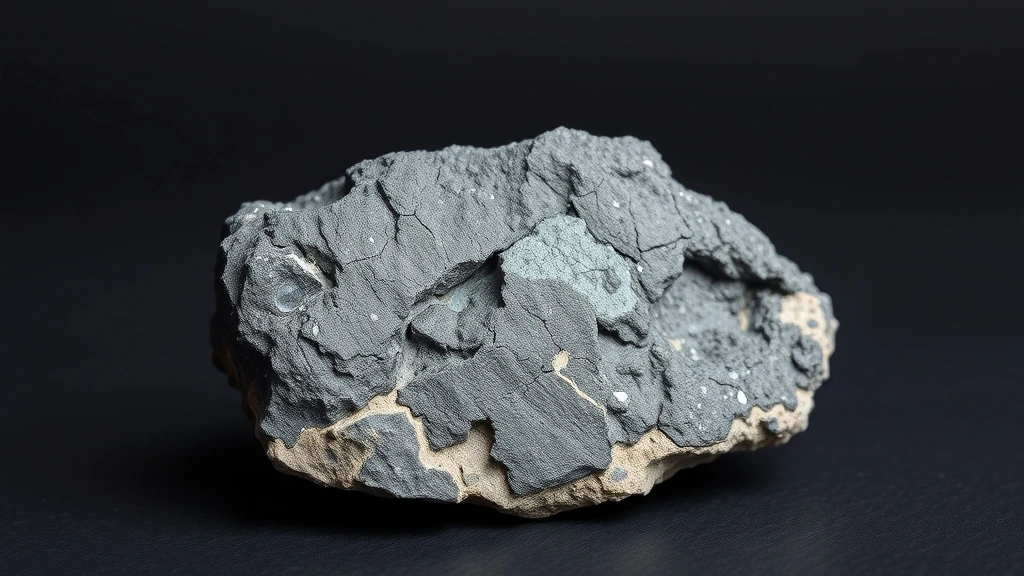
Tugtupite belongs to the sodalite‑group of tectosilicates and is classified as a natural mineral crystal rather than an aggregate or organic material. First discovered in the remote Tugtup Valley of Greenland, it forms in alkaline igneous complexes where late‑stage hydrothermal fluids deposit rare‑element silicates. Its tetragonal symmetry and low density (≈2.36 g cm⁻³) distinguish it from the more common cubic sodalite, while its vivid coloration stems from trapped electron‑defect centers.
What is Tugtupite? Geological Overview & Definition
Tugtupite is a tectosilicate that crystallizes in the tetragonal system, producing well‑formed tabular or prismatic crystals up to several centimeters. It occurs chiefly in nepheline‑syenite pegmatites and alkaline intrusive bodies, often alongside minerals such as eudialyte, labradorite, and sodalite.
Historically, the stone was prized by Inuit hunters who used its bright blue specimens as talismans for protection and navigation. Across ancient lapidary traditions, its striking colors were associated with grounding and vitality, linking the gem to the Root Chakra in contemporary metaphysical practice. In comparative mineralogical collections, practitioners and geologists frequently study Kundalini Citrine alongside this crystal to appreciate their subtle energetic and structural differences.
Tugtupite Chemical Composition & Crystallographic Properties
The ideal formula Na₄(AlBeSi₄O₁₂)Cl reflects a framework of SiO₄ tetrahedra linked by Al and Be cations, with sodium occupying large channels and chlorine balancing charge. Cation substitution—particularly Na⁺ ↔ K⁺ or Ca²⁺—can subtly shift lattice parameters but retains overall tetragonal symmetry. In comparative mineralogical collections, practitioners and geologists frequently study Izumo Zeolite alongside this crystal to appreciate their subtle energetic and structural differences.
Its crystal lattice consists of a double‑six‑membered ring of SiO₄ tetrahedra, generating channels that host the Na⁺ and Cl⁻ ions. This open framework renders the mineral sensitive to acidic solutions, which can leach Na⁺ and destabilize the structure, leading to surface etching.
Color in tugtupite arises from F‑centers, electron‑defect sites created when chlorine vacancies trap electrons during cooling. These centers absorb specific wavelengths, producing the characteristic pink, violet, or neon‑blue fluorescence that intensifies under ultraviolet light.
Thermally, tugtupite is stable up to about 600 °C; beyond this, the framework collapses and chlorine is released, converting the mineral to a colorless sodalite‑type phase. Rapid cooling preserves the color centers, which is why specimens from volcanic environments often display the most vivid hues.
| Property | Specification |
|---|---|
| Mineral Group | Natural Mineral / Crystal |
| Chemical Formula | Na₄ (AlBeSi₄ O₁₂ )Cl |
| Mohs Hardness | 4 |
| Crystal System | Tetragonal |
| Specific Gravity (Density) | 2.36 |
| Refractive Index | 1.496–1.502 |
| Color & Optical Properties | Natural Tugtupite color spectrum and optical dispersion |
| Primary Mining Localities | Global primary localities |
| Water & Chemical Resistance | Sensitive (Avoid prolonged water soaking) |
| Chakra Alignment (Traditional) | Root Chakra (Muladhara) |
| Zodiac Affinity (Traditional) | Taurus, Libra |
| Symbolic Meaning (Traditional) | Grounding, vitality and protection |
Tugtupite Varieties & Color Spectrum
Tugtupite displays distinct mineralogical characteristics across its geological varieties and structural habits. Gemologists evaluate these natural varieties based on crystal habit, trace chromophore concentrations, and visual luster.
Primary Natural Tugtupite
The benchmark natural variety exhibiting diagnostic color saturation and classic crystallographic symmetry.
Distinct Geological Morphs of Tugtupite
Secondary regional and structural varieties formed under localized geological temperature and pressure conditions.
Classic Pink Tugtupite
Classic pink tugtupite forms in tetragonal pegmatites where sodium, aluminum, and beryllium combine with silicon and chloride. The crystals display a delicate rose‑pink hue with occasional white or gray inclusions of quartz. Its rarity stems from the narrow temperature window required for its growth, making it prized among collectors.
Orange‑Red Tugtupite
Orange‑red tugtupite emerges when trace amounts of iron or manganese alter the crystal lattice. The resulting amber‑orange color is often accompanied by black inclusions of graphite, giving the stone a smoky undertone. This variety is less common than its pink counterpart, found mainly in the Burgos region of Spain.
Pale Yellow Tugtupite
Pale yellow tugtupite is produced by low‑temperature crystallization in alkaline pegmatites. Its subtle pale‑yellow tone is enhanced by white mica inclusions that create a subtle lattice pattern. Though visually striking, this variety is scarce, with most specimens originating from the Alaska deposits.
Blue‑Green Tugtupite (Cyan Tugtupite)
Blue‑green tugtupite results from trace amounts of copper incorporated during growth. The stone exhibits a cyan tint with occasional green veining from quartz inclusions. This color morph is exceptionally rare, with only a handful of documented samples from the Czech Republic.
Black Tugtupite (Dark Tugtupite)
Black tugtupite forms when high concentrations of graphite or carbon are present in the host pegmatite. The stone’s deep black appearance is often punctuated by white specks of quartz, giving it a dramatic contrast. Its scarcity is due to the limited availability of suitable carbon‑rich environments.
Trade‑Grade Tugtupite (Synthetic‑Look)
Trade‑grade tugtupite is often produced by heat treatment of natural specimens to intensify color. The resulting stone may display a uniform pink or orange hue with minimal inclusions. While more affordable, these pieces lack the natural textural features prized by serious collectors.
Where is Tugtupite Found? Geological Mining & Extraction
Tugtupite crystallizes in alkaline pegmatites that form during the late stages of granite intrusions. The mineral’s unique chemistry requires a sodium‑rich, beryllium‑rich environment, often associated with sodium‑rich granitic bodies in continental crust settings.
Primary extraction sites include the Burgos region of Spain, the Alaska district in the United States, and the Czech Republic. Mining operations typically involve hand‑pick extraction from pegmatite veins, followed by careful sorting to preserve the delicate crystal structure.
Historical Significance & Cultural Lore of Tugtupite
Across ancient Greco‑Roman lapidary traditions, tugtupite was valued for its soft pink hue, which was believed to enhance grounding and vitality. In early Egyptian jewelry, the stone’s color was associated with the root chakra, symbolizing stability and protection.
In Chinese metaphysical lore, tugtupite was thought to balance the Muladhara energy center, fostering resilience. The mineral also appears in Vedic texts, where its pink and orange varieties were used in ceremonial adornments to promote earthly connection and safeguarding.
Modern Uses & Jewelry Applications of Tugtupite
Tugtupite is prized for its vivid neon‑blue to violet fluorescence, making it a standout in contemporary lapidary work. Artisans typically cut the stone into cabochons to showcase its glow, while skilled faceting can produce dazzling sparkle for high‑end pieces. Ornamental carving also exploits its relatively low Mohs hardness (4), allowing intricate motifs without fracturing.
- Cabochon pendants and earrings highlighting the stone’s internal fire.
- Faceted rings and brooches where precision polishing enhances brilliance.
- Carved beads and ornamental intaglios for decorative art and collector sets.
Metaphysical Properties & Traditional Meaning of Tugtupite
According to historical traditions and metaphysical lore, tugtupite is associated with grounding energy that stabilizes the wearer’s physical presence. Across ancient Mediterranean lapidary records, the stone was believed to channel vitality, protect against negative influences, and foster a sense of inner security. In Vedic-inspired interpretations, its cool hue symbolizes the element of earth, reinforcing resilience and emotional balance.
Which Chakra and Zodiac Signs Align with Tugtupite?
The stone resonates specifically with the Root Chakra (Muladhara), supporting foundational stability and a deep connection to the material world. Practitioners report that wearing tugtupite during meditation can amplify feelings of safety and rootedness, especially during times of transition.
Astrologically, tugtupite aligns with Taurus and Libra, signs known for their appreciation of beauty, harmony, and steadfastness. Individuals born under these signs are said to benefit from the stone’s ability to enhance personal magnetism while maintaining equilibrium in relationships and material pursuits.
How to Identify Real vs. Fake Tugtupite
Artificial imitations of tugtupite often include dyed quartz, synthetic glass, or resin composites that mimic its characteristic fluorescence. These substitutes lack the stone’s true chemical composition (Na₄(AlBeSi₄O₁₂)Cl) and typically exhibit uniform coloration without the subtle internal play seen in natural specimens. Careful observation and simple tests can reveal these differences.
Practical At-Home Authenticity Tests
- Temperature Test (Thermal Feel): Natural tugtupite feels cool to the touch and retains that chill longer than glass or plastic, which quickly equilibrate to ambient temperature.
- Specific Gravity & Weight Test: With a density of 2.36 g/cm³, genuine tugtupite is noticeably lighter than quartz or glass of comparable size; a simple water displacement test can confirm this.
- Scratch & Hardness Test (Mohs Comparison): Using a steel nail (hardness ~5.5) will leave a faint scratch on tugtupite, whereas glass (hardness ~5.5) may resist; a copper coin (hardness ~3) should not mark the stone.
- Microscopic & Loupe Inspection (Internal Inclusions): Under 10× magnification, authentic tugtupite displays minute, irregular inclusions and subtle fluorescence zones, while synthetic glass appears uniformly clear with no natural fracture patterns.
Tugtupite Valuation Factors, Grading & Pricing
The market value of tugtupite hinges first on color saturation. A specimen with a deep, saturated turquoise‑green hue commands higher prices, as its vibrant visual luster reflects the mineral’s natural energetic glow. Collectors prize those pieces that exhibit a uniform, intense coloration across the entire crystal face, indicating minimal surface alteration and optimal light transmission.
Second, crystal size and weight (grams) play a decisive role. Larger, heavier crystals—especially those polished to a smooth, tumbled finish—are preferred over smaller, raw fragments. The presence of natural matrix inclusions can either enhance the specimen’s uniqueness or detract from its value, depending on the extent and visibility of such features. In grading, a clean, well‑polished surface that showcases the mineral’s intrinsic color is paramount, while excessive inclusions may lower the overall assessment.
Finally, ethical sourcing and locality premium influence pricing within both holistic and collector markets. Tugtupite sourced from responsibly managed mines, with transparent supply chains, commands a premium. Provenance from renowned localities, such as the Tugtupite deposits in the Turgay Basin, adds historical and cultural cachet, thereby elevating the stone’s desirability among discerning buyers.
How to Clean and Care for Tugtupite
When maintaining tugtupite, wipe briefly with a damp cloth and dry immediately. This gentle approach prevents moisture from lingering on the crystal surface, which could lead to structural stress or surface etching. Avoid ultrasonic cleaners entirely, as the vibration can induce microfractures in the delicate lattice, compromising both aesthetic integrity and physical stability.
Cleansing and Recharging Tugtupite (Energetic Care)
To cleanse tugtupite of energetic residue, place the stone in a quiet space and allow it to absorb gentle herbal smudging from sage or palo santo. The aromatic vapors help clear residual energies without contacting the crystal surface. Alternatively, expose the mineral to gentle moonlight by setting it on a selenite charging slab during a waxing or full moon. This method recharges the stone’s vibrational field while preserving its structural integrity, ensuring that tugtupite remains both visually stunning and energetically balanced.
Frequently Asked Questions About Tugtupite
Tugtupite displays distinct mineralogical characteristics across its geological varieties and structural habits. Gemologists evaluate these natural varieties based on crystal habit, trace chromophore concentrations, and visual luster.
Primary Natural Tugtupite
The benchmark natural variety exhibiting diagnostic color saturation and classic crystallographic symmetry.
Distinct Geological Morphs of Tugtupite
Secondary regional and structural varieties formed under localized geological temperature and pressure conditions.
Is tugtupite safe to wear in the shower?
No, tugtupite is water‑sensitive and should not be exposed to prolonged moisture. The mineral can absorb water and develop micro‑fractures, compromising its structural integrity. Keep it dry and remove it before showering or swimming to preserve its vibrant orange‑red hue.
How should I clean a tugtupite?
Use a damp microfiber cloth, wipe briefly, and dry immediately. Avoid ultrasonic cleaners or soaking, as these can cause fractures. Light brushing with a soft brush removes dust without stressing the crystal lattice, maintaining its optical clarity.
Can tugtupite be used in jewelry that is worn daily?
Yes, but with caution. Daily wear is acceptable if the stone is set in a protective setting that limits exposure to water and impact. Regular inspection for surface wear will help catch any developing cracks early.
Does tugtupite have any metaphysical associations?
It is linked to the Root Chakra (Muladhara). In esoteric traditions, tugtupite is believed to promote grounding, vitality, and protection, aligning with the earth element and fostering stability in one’s life.
Which zodiac signs are associated with tugtupite?
Taurus and Libra. These signs are said to resonate with tugtupite’s grounding energy, enhancing balance and harmony in both personal and professional realms.
What is the best way to store tugtupite when not in use?
Keep it in a dry, padded container away from direct sunlight. The mineral’s sensitivity to moisture means a moisture‑controlled environment prevents surface degradation, while avoiding UV light preserves its natural color.
Can tugtupite be polished to increase its brilliance?
Polishing is possible but must be done carefully. Use a low‑speed, gentle polishing pad and avoid excessive pressure. Over‑polishing can thin the crystal, increasing the risk of breakage due to its low hardness of 4 on the Mohs scale.
Is tugtupite suitable for use in a humid climate?
It is not ideal for high‑humidity environments. The mineral’s water sensitivity means prolonged exposure to moisture can lead to structural damage. In humid climates, store tugtupite in a dehumidified setting and handle it with dry gloves to maintain its integrity.