
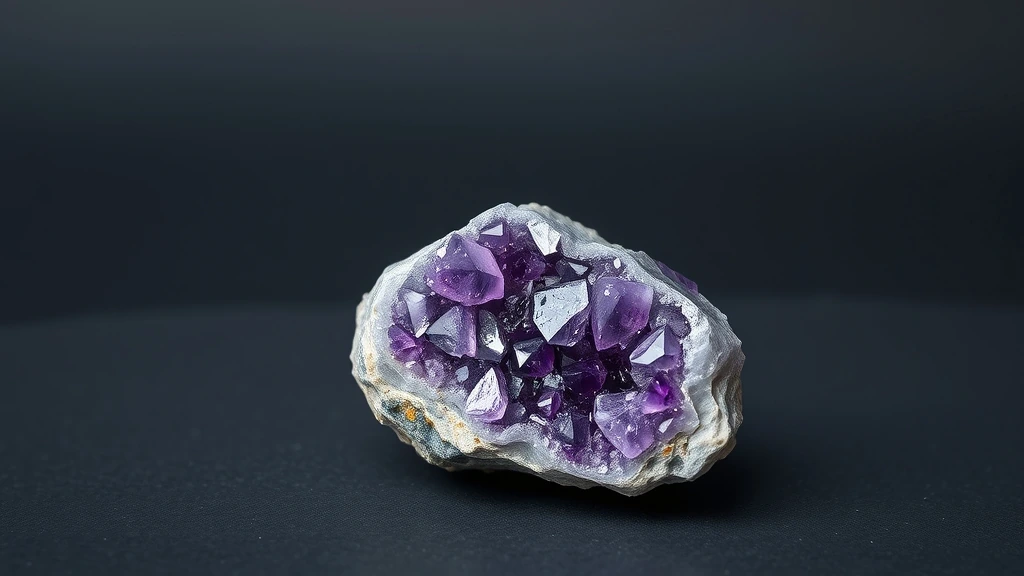
Amethyst belongs to the vast silicate mineral group, specifically classified as a tectosilicate within the quartz family. This geological lineage dictates its structural stability and widespread occurrence in igneous and metamorphic environments. The stone forms through the slow precipitation of silica-rich fluids in volcanic cavities, creating robust crystalline frameworks. Its classification underscores its kinship with clear rock crystal and smoky quartz, sharing identical atomic bonding patterns. Understanding this parent group is essential for identifying its physical resilience and optical behavior in gemological contexts.
What is Turkish Amethyst? Geological Overview & Definition
Turkish amethyst refers to high-quality purple quartz specimens historically sourced from specific volcanic regions in Anatolia. These deposits typically form in hydrothermal veins within rhyolitic tuff, where silica solutions cool slowly over millions of years. The resulting crystals often exhibit well-defined hexagonal prisms capped by rhombohedral terminations, reflecting their internal symmetry.
Geologically, this variety is prized for its intense saturation and clarity, distinguishing it from paler commercial grades. The color zoning often appears in bands, indicating fluctuating iron concentrations during crystal growth. Such formations provide critical insights into the volcanic history of the region, serving as natural records of geological activity. Similarly, the vivid pink hues of Strawberry Calcite, formed through manganese-rich fluids, offer a complementary example of how trace elements create striking color zoning in crystalline structures.
Turkish Amethyst Chemical Composition & Crystallographic Properties
The fundamental building block is silicon dioxide (SiO₂), arranged in a continuous three-dimensional framework of silicon-oxygen tetrahedra. This tectosilicate structure lacks distinct layers or chains, resulting in exceptional mechanical strength and chemical inertness. The crystal lattice belongs to the trigonal system, manifesting externally as hexagonal prisms with rhombohedral faces. This specific symmetry governs the stone’s optical anisotropy and cleavage characteristics. The same robust SiO₂ framework that gives Turkish amethyst its trigonal lattice also underlies the striking, lattice‑like formations of Skeletal Quartz, highlighting how variations in crystal growth can produce such distinct mineral appearances.
Coloration stems from Fe³⁺ cations substituting for silicon atoms within the lattice, creating color centers upon irradiation. These electron traps absorb specific wavelengths of visible light, producing the characteristic purple spectrum. The chromophore mechanism is stable under normal conditions but susceptible to alteration under intense heat or prolonged UV exposure. Understanding this cation substitution is vital for authenticating natural versus synthetic specimens.
The mineral exhibits high resistance to most acids, dissolving only in concentrated hydrofluoric acid due to its strong covalent bonding. Thermal behavior reveals that excessive heating can bleach the color, shifting hues toward yellow or colorless. This thermal sensitivity requires careful handling during cutting and polishing to preserve gemological value. The density of 2.65 g/cm³ remains consistent, aiding in non-destructive identification methods.
Refractive indices range from 1.544 to 1.553, confirming its identity as a silica-based mineral. The Mohs hardness of 7.0 ensures durability for everyday jewelry use, resisting scratches from common materials. These crystallographic properties combine to make amethyst a resilient and optically complex gemstone. Precise measurement of these parameters remains the gold standard for gemological certification.
| Property | Specification |
|---|---|
| Mineral Group | Silicates (Tectosilicates / Quartz Group) |
| Chemical Formula | SiO₂ (Silicon Dioxide with Fe³⁺ traces) |
| Mohs Hardness | 7.0 |
| Crystal System | Trigonal (Hexagonal prismatic crystals) |
| Specific Gravity (Density) | 2.65 – 2.66 |
| Refractive Index | 1.544 – 1.553 |
| Color & Optical Properties | Natural Turkish Amethyst color spectrum and optical dispersion |
| Primary Mining Localities | Brazil (Rio Grande do Sul), Uruguay (Artigas), Madagascar, Russia, Turkey |
| Water & Chemical Resistance | High (Water resistant; avoid prolonged direct sunlight to prevent color fading) |
| Chakra Alignment (Traditional) | Crown Chakra and Third Eye Chakra |
| Zodiac Affinity (Traditional) | Pisces, Aquarius, Virgo |
| Symbolic Meaning (Traditional) | Spiritual clarity, inner peace, meditative focus, and negative energy dispelling |
Turkish Amethyst Varieties & Color Spectrum
Turkish Amethyst displays distinct mineralogical characteristics across its geological varieties and structural habits. Gemologists evaluate these natural varieties based on crystal habit, trace chromophore concentrations, and visual luster.
Primary Natural Turkish Amethyst
The benchmark natural variety exhibiting diagnostic color saturation and classic crystallographic symmetry.
Distinct Geological Morphs of Turkish Amethyst
Secondary regional and structural varieties formed under localized geological temperature and pressure conditions.
Deep‑Cave Amethyst
Formed in the dark, low‑temperature zones of the Kütahya–Afyon pegmatite complexes, this variety exhibits a velvety violet that deepens toward the crystal core. Microscopic rutile needles create a subtle silk‑like sheen, while occasional hematite inclusions give a faint reddish halo. Its scarcity stems from limited exposure to the cave’s stable humidity, making it a prized collector’s item.
Sun‑Kissed Amethyst
Developed in shallow, sun‑exposed veins of the Amasya region, this morph shows a bright, lavender hue with a warm, golden overtone. The presence of iron‑oxide micro‑inclusions reflects sunlight, producing a distinctive sparkle. Because the deposits are relatively shallow, mining yields are higher, yet high‑quality stones remain selective.
Smoky‑Veil Amethyst
Located primarily in the Erzincan high‑altitude pegmatites, this type blends deep violet with a translucent smoky gray veil caused by dispersed manganese and chlorite particles. The veil softens the color, giving the stone a mystic, almost ethereal appearance. Its rarity is amplified by the narrow vein thickness and the delicate balance required to preserve the veil during extraction.
Frosted Amethyst
Originating from the Bursa‑Balıkesir border, this variety displays a pale, icy violet with a fine micro‑fracture network that diffracts light, creating a frosted surface effect. Tiny calcite crystals intergrown within the quartz lattice enhance the icy look. Though the deposit is extensive, only stones with the optimal frost pattern are selected for high‑end jewelry.
Imperial‑Tone Amethyst
Found in the central Anatolian volcanic‑derived pegmatites, this rare morph exhibits a rich, royal purple bordering on ruby‑red due to higher concentrations of Fe³⁺. The color gradient is often accentuated by fluid inclusions that trap minute bubbles, adding depth. Imperial‑Tone amethyst commands premium prices because the geological conditions that produce such high iron content are exceptionally localized.
Trade‑Grade Turkish Amethyst
Exported from the Western Anatolia processing hubs, this commercial grade is a blend of the above varieties, sorted for consistent medium violet color and minimal inclusions. While not as rare as the specialty morphs, its uniformity makes it a staple in global gemstone markets. The trade grade benefits from modern wet‑cutting techniques that preserve clarity and enhance the stone’s natural luster.
Where is Turkish Amethyst Found? Geological Mining & Extraction
The primary host rocks are granite‑derived pegmatites that intruded during the late Cretaceous to early Tertiary orogenic events across central Turkey. These pegmatites are rich in quartz, feldspar, and mica, providing the silica‑rich environment necessary for amethyst crystallization under low‑temperature hydrothermal fluids.
Major extraction zones include the Kütahya‑Afyon corridor, the Erzincan highlands, and the Amasya‑Sivas belt, where open‑pit and underground methods target vein‑filled cavities. Modern Turkish mining employs hydraulic fracturing and careful wet‑screening to separate amethyst crystals from gangue, minimizing damage to the delicate crystal faces and preserving the gemstone’s natural refractive index.
Historical Significance & Cultural Lore of Turkish Amethyst
Across ancient lapidary traditions, Turkish amethyst entered the Mediterranean trade routes as early as the Hellenistic period, prized by Greco‑Roman artisans for its purported ability to ward off intoxication. Excavations at the ancient city of Ephesus have uncovered amethyst beads in burial contexts, indicating its role in funerary rites and elite adornment.
In early Vedic texts, the stone is linked to the Sahasrara (Crown) chakra, symbolizing spiritual clarity and inner peace; similar associations appear in Chinese Taoist alchemy, where amethyst was used in meditative talismans. Throughout these cultures, the gemstone’s purple hue was interpreted as a bridge between the earthly and the divine, reinforcing its enduring metaphysical reputation.
Modern Uses & Jewelry Applications of Turkish Amethyst
Turkish amethyst is prized for its vibrant purple hues, making it a staple in high-end lapidary work and ornamental design. Lapidaries typically cut these stones into faceted gems to maximize brilliance or cabochons to highlight their color saturation. The stone’s durability allows for intricate carving, often used in decorative objects and architectural accents.
- Faceted Jewelry: Ideal for rings, pendants, and earrings where light performance is paramount.
- Cabochon Settings: Popular for vintage-style designs that emphasize the stone’s deep violet body color.
- Ornamental Carvings: Used in intaglio seals and decorative vases due to its workability.
- Architectural Accents: Incorporated into mosaics and interior design elements for aesthetic appeal.
Metaphysical Properties & Traditional Meaning of Turkish Amethyst
According to historical traditions and metaphysical lore, amethyst has long been revered for its ability to promote spiritual clarity and inner peace. Ancient Mediterranean cultures associated the stone with sobriety and mental calm, while Vedic texts linked it to heightened awareness. Practitioners believe the gemstone helps dispel negative energy, fostering a state of meditative focus during contemplative practices.
The stone is often described as a guardian of the mind, helping to balance emotional turbulence and enhance intuition. In universal lapidary traditions, it is seen as a bridge between the physical and spiritual realms. Users frequently report a sense of emotional resonance, feeling more grounded and centered after prolonged exposure to the crystal.
Which Chakra and Zodiac Signs Align with Turkish Amethyst?
In esoteric crystal healing systems, amethyst is primarily aligned with the Crown Chakra and the Third Eye Chakra. The Crown Chakra, located at the top of the head, governs spiritual connection and higher consciousness. The Third Eye Chakra, situated between the eyebrows, is associated with intuition, insight, and mental clarity. Together, these energy centers facilitate deep meditation and expanded awareness.
Astrologically, amethyst is canonically linked to the zodiac signs Pisces, Aquarius, and Virgo. Pisces, a water sign, resonates with the stone’s emotional soothing properties. Aquarius, an air sign, connects with its intellectual clarity and humanitarian ideals. Virgo, an earth sign, benefits from the stone’s ability to promote order, precision, and mental discipline.
How to Identify Real vs. Fake Turkish Amethyst
Distinguishing genuine amethyst from artificial imitations requires attention to subtle physical and optical characteristics. Common fakes include synthetic glass, which often lacks natural inclusions, and dyed quartz, where color may be uneven or concentrated in cracks. Understanding these differences is crucial for ensuring authenticity in gemstone purchases.
Practical At-Home Authenticity Tests
- Temperature Test (Thermal Feel): Genuine amethyst feels cool to the touch and warms slowly, whereas glass or plastic imitations warm up much faster due to lower thermal conductivity.
- Specific Gravity & Weight Test: Amethyst has a specific gravity of approximately 2.65. It should feel heavier than glass of the same size, which typically has a lower density.
- Scratch & Hardness Test (Mohs Comparison): Amethyst rates 7 on the Mohs scale. It will scratch glass (Mohs 5.5) but will not be scratched by steel (Mohs 5.5). Be careful not to scratch other hard minerals.
- Microscopic & Loupe Inspection (Internal Inclusions): Use a 10x loupe to look for natural inclusions like rutile needles or fluid inclusions. Glass fakes often contain tiny, perfectly round air bubbles, which are not found in natural amethyst.
Turkish Amethyst Valuation Factors, Grading & Pricing
Market value is primarily driven by Color Saturation, which dictates the stone’s visual vibrancy and commercial appeal. High-grade specimens exhibit a deep, uniform purple hue that retains its intensity across the entire surface. This natural energetic luster enhances the gem’s aesthetic presence, making it highly desirable for both jewelry and display pieces.
Pricing is strictly determined by Crystal Size & Weight (Grams), as these stones are valued by mass and physical dimensions rather than faceted cut. Raw specimens command different prices than tumbled stones, with superior polish quality significantly increasing their market worth. Natural matrix inclusions can also influence value, as unique geological formations often attract collectors seeking distinctive provenance markers.
The Ethical Sourcing & Locality Premium plays a crucial role in holistic and collector markets today. Buyers increasingly prioritize transparent supply chains that ensure fair labor practices and environmental stewardship during extraction. Specific locality labels add a layer of prestige, allowing enthusiasts to trace the stone’s origin to verified Turkish mining regions.
How to Clean and Care for Turkish Amethyst
Turkish amethyst is water-resistant, making it safe to clean with warm soapy water for routine maintenance. Gently scrub the surface with a soft brush to remove dust and oils without damaging the crystal structure. Avoid prolonged direct sunlight exposure, as ultraviolet radiation can gradually cause the purple coloration to fade over time.
Ultrasonic cleaning is generally acceptable for untreated specimens, provided they do not contain liquid inclusions. If the stone has visible internal fluids, skip ultrasonic baths to prevent potential cracking or damage to the inclusions. Always dry the piece thoroughly with a lint-free cloth after washing to maintain its natural luster.
Cleansing and Recharging Turkish Amethyst (Energetic Care)
For energetic maintenance, practitioners often use herbal smudging to clear perceived negative energy from the stone. Pass the amethyst gently through the smoke of sage or palo santo for a few minutes. This dry method respects the crystal’s physical integrity while aligning with traditional holistic cleansing practices.
Alternatively, place the stone on a selenite charging slab or expose it to gentle moonlight overnight. These methods allow the amethyst to recharge its energetic properties without subjecting the crystal lattice to harmful heat or moisture. Avoid direct intense sunlight, which can degrade the gem’s color and structural stability.
Frequently Asked Questions About Turkish Amethyst
Turkish Amethyst displays distinct mineralogical characteristics across its geological varieties and structural habits. Gemologists evaluate these natural varieties based on crystal habit, trace chromophore concentrations, and visual luster.
Primary Natural Turkish Amethyst
The benchmark natural variety exhibiting diagnostic color saturation and classic crystallographic symmetry.
Distinct Geological Morphs of Turkish Amethyst
Secondary regional and structural varieties formed under localized geological temperature and pressure conditions.
Is Turkish amethyst water‑resistant?
Yes, it is highly water‑resistant. While the stone tolerates everyday exposure to rain or hand washing, prolonged direct sunlight can cause the violet hue to fade, so it is best to store the gem in a cool, shaded environment when not in use.
Can I wear Turkish amethyst in the shower?
It can be worn in the shower without damage. The quartz structure resists moisture, but extended steam exposure may encourage surface grime buildup; a gentle rinse with warm soapy water afterward helps maintain its brilliance without harming the crystal lattice.
How should I clean Turkish amethyst safely?
Warm, mild soap and water are safe for cleaning. Submerge the stone briefly, use a soft brush to dislodge particles, then rinse and pat dry with a lint‑free cloth; this removes oils while preserving the Fe³⁺‑induced violet coloration.
Is ultrasonic cleaning appropriate for Turkish amethyst?
Ultrasonic cleaning is generally acceptable for untreated stones. The high‑frequency vibrations remove stubborn residues, but if the specimen contains liquid inclusions, the process could cause micro‑fractures, so inspect the gem before using an ultrasonic bath.
Which zodiac signs are linked to Turkish amethyst?
Pisces, Aquarius, and Virgo are the associated signs. In astrological tradition, these air and earth signs are thought to benefit from the stone’s calming energy, aligning with the gem’s historic use for spiritual clarity and emotional balance.
Which chakras does Turkish amethyst activate?
It resonates with the Crown Chakra and the Third Eye Chakra. Placement on the forehead or crown is believed to enhance meditative focus, supporting inner peace and the perception of subtle energies during contemplative practices.
Does Turkish amethyst fade if left in sunlight?
Yes, prolonged direct sunlight can cause fading. Ultraviolet radiation can alter the Fe³⁺ charge transfer that creates the deep violet hue, so storing the gemstone in a dark pouch or display case helps preserve its color intensity over time.
Is Turkish amethyst suitable for everyday jewelry?
Absolutely, it is suitable for daily wear. With a Mohs hardness of 7, the stone resists scratches from most household activities, and its water‑resistant nature makes it practical for rings, pendants, and bracelets, provided occasional cleaning is performed.