
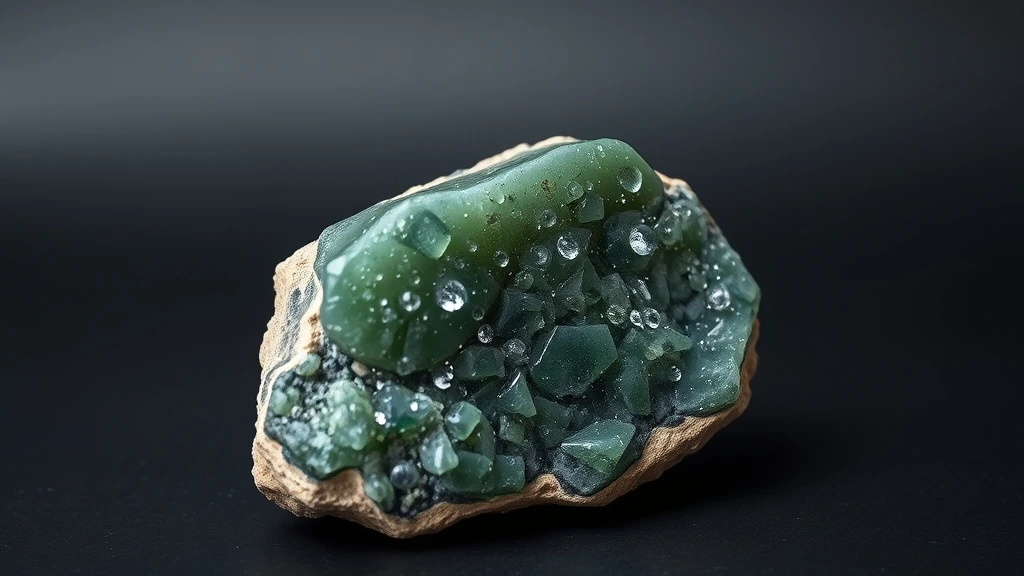
Aventurine represents a specific type of chalcedony, which is a cryptocrystalline form of the mineral quartz. This stone belongs to the broader silica mineral group, known for its widespread occurrence in geological formations worldwide. Unlike macrocrystalline quartz, aventurine features a fine-grained structure that scatters light, creating a unique visual effect. The term “aventurine” itself reflects this sparkling quality, distinguishing it from other opaque quartz varieties.
What is Zimbabwe Aventurine? Geological Overview & Definition
Zimbabwe Aventurine is primarily composed of microcrystalline quartz interspersed with tiny, reflective inclusions. These inclusions are typically chlorite or other green minerals, which give the stone its characteristic “sandy” or glittering appearance. The host rock is usually chalcedony, a dense, fine-grained variety of quartz that forms in cavities or veins. While the delicate, glittering inclusions of Zimbabwe Aventurine set it apart, collectors often compare its earthy aesthetic to the bold, fractured patterns found in White Brecciated Jasper.
The geological origin involves the slow precipitation of silica-rich solutions in hydrothermal environments. As the silica cooled, it formed the cryptocrystalline matrix that traps the green mineral flakes. This process results in a durable, isotropic material that is highly valued for lapidary work. The specific provenance in Zimbabwe contributes to its consistent color saturation and clarity. While the distinctive green inclusions define this specific Zimbabwean variety, collectors often compare its structural integrity to that of White Aventurine, which shares the same cryptocrystalline quartz foundation but lacks the characteristic mica flecks.
Zimbabwe Aventurine Chemical Composition & Crystallographic Properties
The fundamental building block of aventurine is quartz, which crystallizes in the trigonal crystal system. This structure features a hexagonal prism with a pyramidal termination, defined by specific lattice parameters. The SiO₄ tetrahedra are linked in a three-dimensional framework, creating a rigid and stable network. This crystallographic arrangement ensures high mechanical strength and chemical resistance.
While the bulk composition is SiO₂, the green color arises from chromophore inclusions rather than cation substitution in the quartz lattice. The primary inclusions are often chlorite or epidote, which contain iron and magnesium. These impurities do not alter the stoichiometry of the quartz but provide the visual aventurescence. The refractive index of the quartz host typically ranges from 1.54 to 1.55.
The stone exhibits isotropic optical properties due to its fine-grained, polycrystalline nature. This means it does not display birefringence under polarized light, unlike macrocrystalline quartz. The Mohs hardness of 6.5 to 7.0 reflects the durability of the silica framework. This hardness makes it suitable for jewelry, though the inclusions may create slight stress points.
Thermal stability is high, as quartz remains stable up to its melting point of approximately 1,650°C. However, rapid temperature changes can cause thermal shock, leading to fracturing. The material is chemically inert to most acids, except for hydrofluoric acid, which dissolves silica. This acid sensitivity is a key consideration for cleaning and maintenance in gemological practices.
| Property | Specification |
|---|---|
| Mineral Group | Natural Mineral / Crystal |
| Chemical Formula | SiO₂ |
| Mohs Hardness | 6.5 – 7.0 |
| Crystal System | Trigonal |
| Color & Optical Properties | Natural Zimbabwe Aventurine color spectrum and optical dispersion |
| Primary Mining Localities | Global primary localities |
| Water & Chemical Resistance | High (Safe for gentle water washing) |
| Chakra Alignment (Traditional) | Heart Chakra (Anahata) |
| Zodiac Affinity (Traditional) | Taurus, Libra |
| Symbolic Meaning (Traditional) | Spiritual awareness and universal harmony |
Zimbabwe Aventurine Varieties & Color Spectrum
Zimbabwe Aventurine displays distinct mineralogical characteristics across its geological varieties and structural habits. Gemologists evaluate these natural varieties based on crystal habit, trace chromophore concentrations, and visual luster.
Primary Natural Zimbabwe Aventurine
The benchmark natural variety exhibiting diagnostic color saturation and classic crystallographic symmetry.
Distinct Geological Morphs of Zimbabwe Aventurine
Secondary regional and structural varieties formed under localized geological temperature and pressure conditions.
Green Aventurine (Chlorite‑Tinted)
Formed in silica‑rich pegmatites where fine chlorite platelets align parallel to the crystal lattice, this variety displays a soft, moss‑green sheen. The characteristic schiller effect arises from light scattering off microscopic inclusions, giving the stone a subtle sparkle. It is the most abundant morph in Zimbabwe and is widely traded for jewelry.
Blue Aventurine (Cobalt‑Stained)
Blue aventurine develops when trace cobalt oxides substitute into the quartz framework, producing a delicate sky‑blue hue. Thin, platy inclusions of rutile generate a metallic flash that intensifies under angled light. This color is rarer than the green, often found in isolated pockets of the Great Dyke.
Red Aventurine (Hematite‑Speckled)
The red variant acquires its tone from dispersed hematite micro‑inclusions, which also impart a faint metallic glitter. Formed in oxidizing zones of the pegmatite, the stone exhibits a warm, earthy glow that deepens with polishing. Its scarcity makes it a premium choice for high‑end lapidary work.
Yellow Aventurine (Goethite‑Infused)
Yellow aventurine’s sunshine hue is the result of fine goethite particles suspended within the quartz matrix. The goethite flakes produce a bright, buttery luster that can shift to amber under different lighting. Though less common than green, it is harvested from the same mining districts and prized for its vibrant appearance.
Black Aventurine (Magnetite‑Dominated)
In this dark morph, microscopic magnetite crystals replace typical silicate inclusions, yielding a deep charcoal color with occasional golden flashes. The stone forms in highly reduced environments where iron is abundant, often near the base of the Great Dyke’s intrusive bodies. Its dramatic contrast makes it a favorite for ornamental cabochons.
Trade‑Name “Zim‑Avent” (Mixed‑Color)
“Zim‑Avent” is a commercial blend of green, blue, and yellow aventurine sourced from multiple seams, marketed for its multichromatic appeal. The mixture retains the schiller effect across the color spectrum, offering a versatile material for designers. While not a distinct geological variety, its popularity underscores Zimbabwe’s role in the global aventurine market.
Where is Zimbabwe Aventurine Found? Geological Mining & Extraction
Aventurine in Zimbabwe occurs chiefly within the Great Dyke, a 550‑km linear igneous intrusion that hosts extensive quartz‑rich pegmatites. These pegmatites crystallize under high‑temperature, low‑pressure conditions, allowing silica to incorporate metallic platelets that generate the stone’s signature shimmer.
Mining operations concentrate around the Mberengwa and Gwanda districts, where artisanal and small‑scale miners extract the material using hand tools and hydraulic methods. After extraction, the rough ore is washed, sorted by color, and sent to processing centers for cutting and polishing before entering international trade.
Historical Significance & Cultural Lore of Zimbabwe Aventurine
Across ancient lapidary traditions, aventurine was prized for its protective and harmonizing qualities, a belief echoed in Greco‑Roman texts that linked the stone to Venus’s favor. Egyptian amulets from the New Kingdom occasionally feature green aventurine chips, suggesting its use as a talisman for fertility and renewal.
In Vedic astrology, aventurine aligns with the Heart Chakra (Anahata), promoting spiritual awareness and universal harmony, a concept reflected in early Indian manuscripts that describe the stone’s ability to balance emotions. Throughout early African trade routes, Zimbabwe’s aventurine was exchanged for ivory and gold, embedding the gem in regional mythologies that celebrate its grounding energy.
Modern Uses & Jewelry Applications of Zimbabwe Aventurine
Zimbabwe Aventurine is prized for its subtle green sparkle, making it ideal for both lapidary cutting and ornamental carving. Jewelers often polish it into smooth cabochons that accentuate the stone’s natural inclusions, or cut it into facets to enhance its play of light. The mineral’s moderate hardness (6.5–7.0 on the Mohs scale) allows for delicate engraving, while its trigonal crystal system provides a predictable growth pattern for precise shaping.
- Cabochon earrings, pendants, and rings that showcase the stone’s natural luster
- Faceted brooches and cufflinks that highlight the subtle green flashes
- Ornamental carvings for architectural accents and ceremonial objects
Metaphysical Properties & Traditional Meaning of Zimbabwe Aventurine
According to historical traditions and metaphysical lore, Zimbabwe Aventurine is associated with emotional balance and the cultivation of inner peace. Across ancient Mediterranean and Vedic lapidary lore, the stone is believed to soothe the heart, encouraging compassion and emotional resilience. Its green hue is thought to resonate with the Heart Chakra (Anahata), fostering a sense of universal harmony and spiritual awareness.
Which Chakra and Zodiac Signs Align with Zimbabwe Aventurine?
Zimbabwe Aventurine aligns with the Heart Chakra (Anahata), the center of love, compassion, and emotional equilibrium. This chakra is traditionally linked to the color green, mirroring the stone’s natural hue.
The stone is also said to favor the zodiac signs Taurus and Libra, both of which are ruled by Venus, the planet of beauty and harmony. In astrological practice, these signs are believed to benefit from the stone’s grounding and balancing energies, enhancing relationships and personal growth.
How to Identify Real vs. Fake Zimbabwe Aventurine
Collectors and jewelers must be vigilant against artificial imitations such as synthetic glass or dyed quartz. Real Zimbabwe Aventurine displays a natural green speckling and a slight translucency that synthetic counterparts often lack.
Practical At-Home Authenticity Tests
- Temperature Test (Thermal Feel): Hold the stone in your palm; genuine quartz feels cool to the touch for a few seconds, whereas glass warms quickly.
- Specific Gravity & Weight Test: Compare the stone’s weight to a known quartz sample of similar size; real aventurine should feel slightly heavier.
- Scratch & Hardness Test (Mohs Comparison): Use a steel file or a glass plate; real aventurine should resist scratching, matching a hardness of 6.5–7.0.
- Microscopic & Loupe Inspection (Internal Inclusions): Examine under a loupe; authentic aventurine shows natural, irregular iron oxide inclusions, while synthetic versions often exhibit uniform, artificial patterns.
Zimbabwe Aventurine Valuation Factors, Grading & Pricing
Market value is primarily driven by Color Saturation, where deep, uniform green hues command higher premiums than pale or mottled specimens. The visual vibrancy of the internal inclusions, often referred to as aventurescence, must appear dense and evenly distributed throughout the stone. A natural, glassy luster further enhances desirability, signaling a well-preserved surface free from excessive abrasion or dulling.
Pricing is determined by Crystal Size & Weight (Grams), with larger, intact specimens fetching significantly higher prices per unit. Tumbled stones are graded on polish quality, where a smooth, chip-free finish indicates superior lapidary craftsmanship. Natural matrix inclusions, such as quartz or feldspar, are valued for their aesthetic character rather than viewed as flaws in the collector market.
Ethical Sourcing & Locality Premium plays a critical role in holistic and collector markets, where provenance directly impacts perceived value. Stones from verified Zimbabwean deposits often carry a premium due to their distinct mineralogical signature and historical significance. Buyers increasingly prioritize documentation that confirms responsible extraction practices, ensuring the material aligns with modern ethical standards for gemstone acquisition.
How to Clean and Care for Zimbabwe Aventurine
Maintain the stone’s integrity by using warm soapy water and a soft, lint-free cloth for routine cleaning. Gently wipe the surface to remove oils and dust, ensuring no abrasive particles scratch the polished finish. Rinse thoroughly with clean water and dry immediately to prevent any potential water spots or residue buildup on the surface.
It is imperative to avoid ultrasonic cleaners entirely, as high-frequency vibrations can induce structural fractures within the mineral lattice. The stone’s moderate hardness and potential for internal inclusions make it susceptible to stress from sonic agitation. Store the specimen in a padded jewelry box to protect it from physical impacts and maintain its optimal luster over time.
Cleansing and Recharging Zimbabwe Aventurine (Energetic Care)
For holistic energetic maintenance, place the stone on a selenite charging slab overnight to absorb ambient lunar energy. This dry method allows the crystal to reset its vibrational frequency without exposing it to moisture or thermal stress. The gentle, passive nature of this technique ensures the mineral structure remains completely undisturbed during the recharging process.
Alternatively, use herbal smudging with sage or palo santo to clear perceived energetic stagnation around the stone. Hold the specimen in a safe distance from the smoke, allowing the aromatic vapors to pass over the surface without direct contact. This traditional practice respects the mineral’s physical stability while addressing metaphysical cleansing preferences in a controlled environment.
Frequently Asked Questions About Zimbabwe Aventurine
Zimbabwe Aventurine displays distinct mineralogical characteristics across its geological varieties and structural habits. Gemologists evaluate these natural varieties based on crystal habit, trace chromophore concentrations, and visual luster.
Primary Natural Zimbabwe Aventurine
The benchmark natural variety exhibiting diagnostic color saturation and classic crystallographic symmetry.
Distinct Geological Morphs of Zimbabwe Aventurine
Secondary regional and structural varieties formed under localized geological temperature and pressure conditions.
Is Zimbabwe Aventurine safe to wear in the shower?
Yes, it is safe for gentle water washing. The quartz matrix of aventurine is highly resistant to water, making it suitable for everyday wear. However, avoid prolonged exposure to harsh chemicals or high‑temperature steam, which can stress the stone’s surface.
Can I clean Zimbabwe Aventurine with an ultrasonic cleaner?
No, ultrasonic cleaning should be avoided. Warm soapy water and a soft cloth are recommended to prevent microfractures. The fine inclusions that give aventurine its sparkle can be damaged by the vibration forces of an ultrasonic bath.
What zodiac signs are associated with Zimbabwe Aventurine?
Taurus and Libra are the aligned zodiac signs. These signs are linked to the stone’s calming influence and its ability to promote balance. In astrological practice, aventurine is often used to support decision‑making and harmony.
Which chakra does Zimbabwe Aventurine correspond to?
The Heart Chakra (Anahata). This chakra governs love, compassion, and emotional balance. Aventurine’s gentle green hues are believed to enhance emotional healing and foster a sense of inner peace.
Is Zimbabwe Aventurine suitable for jewelry that will be exposed to sunlight?
Yes, it tolerates sunlight well. Aventurine’s quartz composition resists fading and maintains its color under UV exposure. Nevertheless, prolonged direct sunlight can cause slight surface dulling, so occasional polishing is advisable.
How should I store Zimbabwe Aventurine to preserve its luster?
Keep it in a soft pouch or lined jewelry box. Avoid contact with harder stones that could scratch its surface. Store away from strong magnetic fields, as quartz can be mildly magnetically sensitive, though this rarely affects its appearance.
Can I use Zimbabwe Aventurine in a crystal healing setting?
Absolutely, it is a popular choice for crystal healing. Its association with the Heart Chakra makes it ideal for practices focused on emotional release and compassion. Place it on the chest area during meditation to encourage emotional balance.
Does Zimbabwe Aventurine have any special care instructions for cleaning?
Use warm soapy water and a soft cloth, then dry with a microfiber towel. Avoid abrasive cleaners or ultrasonic devices, which can crack the stone’s delicate inclusions. Gentle cleaning preserves the natural sparkle of the green veins that define aventurine.