
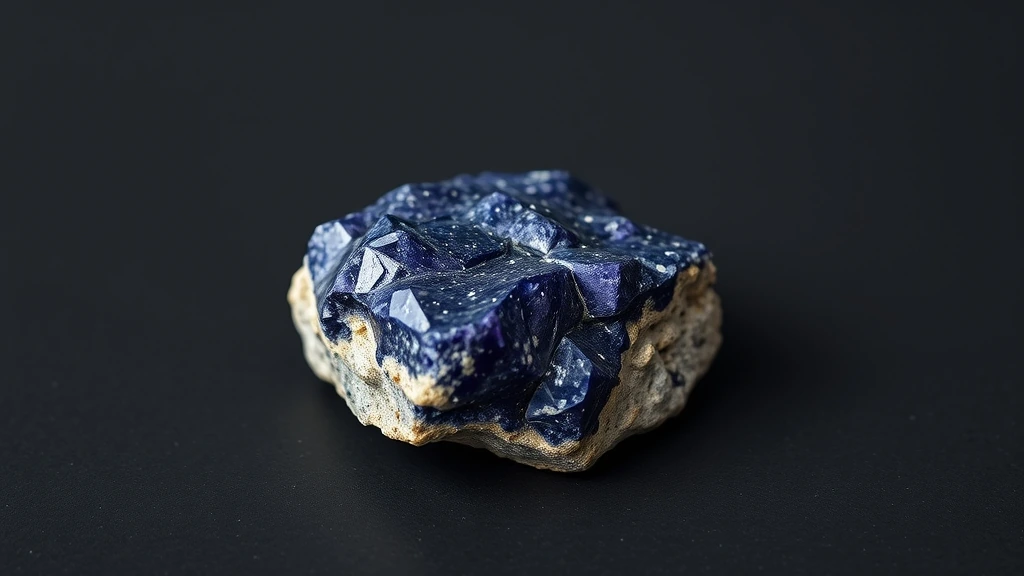
Iolite belongs to the silicate mineral family, specifically classified as a natural crystal rather than an organic material. It forms within metamorphic rocks, where high pressure and temperature transform precursor minerals into this distinct gemstone. As a member of the cordierite group, it shares structural similarities with other magnesium-aluminum silicates. This geological origin ensures its formation is tied to specific tectonic environments, distinguishing it from synthetic alternatives.
What is Iolite Gemstone? Geological Overview & Definition
Iolite is a gem-quality variety of cordierite, a magnesium iron aluminum silicate. It typically forms in high-grade metamorphic rocks such as schists and gneisses. The stone is renowned for its exceptional trichroism, displaying different colors when viewed from different angles.
This optical phenomenon makes iolite highly recognizable among gemologists. It often occurs in association with garnet, quartz, and feldspar. The mineral’s formation requires specific geochemical conditions, ensuring its rarity in the global gem market.
Iolite Gemstone Chemical Composition & Crystallographic Properties
Iolite crystallizes in the orthorhombic system, characterized by three mutually perpendicular axes of unequal length. This lattice structure allows for the distinct pleochroic properties observed in gem specimens. The unit cell contains complex silicate tetrahedra linked by aluminum and magnesium cations.
The primary chemical formula is Mg₂Al₄Si₅O₁₈, though iron can substitute for magnesium in the crystal lattice. This cation substitution directly influences the stone’s color intensity and refractive index. Higher iron content generally results in deeper blue or violet hues.
The chromophore responsible for iolite’s color is the iron ion within the crystal structure. These color centers absorb specific wavelengths of light, transmitting the complementary blue-violet spectrum. The stone is chemically stable and resistant to most acids, making it durable for jewelry.
Thermal behavior is stable under normal wear conditions, with no significant alteration in optical properties. The refractive index ranges from 1.527 to 1.578, increasing with iron content. This high dispersion contributes to the stone’s brilliant fire and visual appeal.
| Property | Specification |
|---|---|
| Mineral Group | Natural Mineral / Crystal |
| Chemical Formula | Mg₂Al₄Si₅O₁₈ |
| Mohs Hardness | 7–7.5 |
| Crystal System | Orthorhombic |
| Specific Gravity (Density) | 2.57–2.66 |
| Refractive Index | n α = 1.527 – 1.560 n β = 1.532 – 1.574 n γ = 1.538 – 1.578 Indices increase with Fe content. |
| Color & Optical Properties | Natural Iolite Gemstone color spectrum and optical dispersion |
| Primary Mining Localities | Global primary localities |
| Water & Chemical Resistance | High (Safe for gentle water washing) |
| Chakra Alignment (Traditional) | Third Eye Chakra, Crown Chakra |
| Zodiac Affinity (Traditional) | Virgo, Sagittarius |
| Symbolic Meaning (Traditional) | Clarity of vision, intuition, and spiritual insight |
Iolite Gemstone Varieties & Color Spectrum
Iolite exhibits a striking range of hues primarily driven by iron content and crystal orientation. The most prized specimens display intense violet-blue tones, while others appear grayish or brownish depending on cut angle. Pleochroism is the defining optical characteristic, allowing a single stone to show different colors from various viewpoints.
Deep Blue Iolite
This variety features the most saturated blue hues, often resembling sapphire in quality. It forms in high-temperature metamorphic environments where iron substitution is optimal. High iron content enhances the refractive index, boosting brilliance and color depth. Such stones are rare and command premium prices in the gem market.
Violet-Purple Iolite
These stones display a distinct purple tint, often appearing more violet than blue. They typically originate from specific pegmatite zones with unique trace element ratios. Crystal lattice distortion during formation contributes to this specific chromatic signature. Collectors value these for their mystical appearance and rarity.
Grayish-Blue Iolite
Common in commercial lots, this variety appears duller due to lower iron saturation. It often contains minor inclusions that scatter light, reducing overall clarity. Lower refractive index values result from reduced iron substitution in the silicate structure. While less valuable, it remains popular for affordable jewelry pieces.
Brownish-Iolite
This morph appears brownish when viewed along certain crystal axes, masking its blue potential. It is frequently found in surface-alluvial deposits where weathering has occurred. Optical axis alignment determines whether the blue or brown hue dominates the visual field. Skilled cutters can maximize blue tones by orienting the stone correctly.
Colorless Iolite
Rarely seen in gem quality, this variety lacks significant iron impurities. It appears transparent with a glassy luster, similar to quartz. Minimal iron substitution results in very low color saturation across all axes. These stones are valued for their purity rather than chromatic intensity.
Where is Iolite Gemstone Found? Geological Mining & Extraction
Iolite primarily occurs in metamorphic schists and gneisses, often associated with garnet and cordierite. These rocks formed under high pressure and temperature conditions in the Earth’s crust. The mineral crystallizes in orthorhombic prisms, which are frequently fractured during tectonic activity.
Major deposits are located in Madagascar, Myanmar, and Tanzania, where alluvial mining is common. Finland and Norway also host significant pegmatite sources with gem-quality crystals. Extraction involves careful hand-picking to preserve the fragile crystal structure. Surface deposits allow for efficient recovery of high-clarity stones.
Historical Significance & Cultural Lore of Iolite Gemstone
Known as “Viking’s Stone,” iolite was reportedly used by Norse sailors to navigate cloudy skies. The stone’s strong pleochroism allowed them to detect the sun’s position through polarized light. This practical application gave the mineral a revered status in Scandinavian maritime history. Archaeological findings suggest its use in ceremonial and navigational contexts.
In modern times, iolite is associated with clarity of vision and spiritual insight. It is linked to the Third Eye Chakra, symbolizing intuition and mental focus. Ancient Greek texts occasionally reference similar blue stones, though identification is debated. Its enduring appeal lies in its unique optical properties and historical narrative.
Modern Uses & Jewelry Applications of Iolite Gemstone
Lapidaries value iolite for its exceptional pleochroism, which allows cutters to orient the stone to maximize its vibrant blue-violet hue. This unique optical property distinguishes it from other blue gemstones in the market.
- Faceted Cuts: Standard brilliant and oval cuts are popular to enhance brilliance and color saturation.
- Cabochons: Smooth, polished domes are used for vintage-style rings and pendants.
- Ornamental Carving: Larger, high-clarity crystals are carved into beads, figurines, and decorative inlays.
Carat, Quality Grades & Value Factors of Iolite
According to historical traditions and metaphysical lore, iolite is revered as the “Viking’s Compass” for its ability to sharpen mental focus. Practitioners believe it promotes clarity of vision, helping individuals see through emotional fog and make rational decisions.
This stone is also associated with deep spiritual insight, encouraging users to trust their intuition. It is often used in meditation to bridge the gap between conscious thought and higher awareness, fostering a sense of inner peace.
Which Chakra and Zodiac Signs Align with Iolite Gemstone?
In esoteric practices, iolite is primarily aligned with the Third Eye Chakra. This connection supports enhanced intuition, psychic perception, and the ability to discern truth from illusion.
It also resonates strongly with the Crown Chakra, facilitating a deeper connection to universal consciousness and spiritual wisdom. This dual alignment makes it a powerful tool for holistic spiritual development.
Astrologically, iolite is the designated birthstone for Virgo and Sagittarius. For Virgos, it enhances analytical precision, while for Sagittarians, it amplifies their natural adventurous spirit and philosophical depth.
How to Identify Real vs. Fake Iolite Gemstone
Distinguishing genuine iolite from imitations requires attention to specific optical and physical characteristics. Common fakes include synthetic glass, dyed quartz, and lab-created spinel, which may mimic color but lack natural inclusions.
Practical At-Home Authenticity Tests
- Temperature Test (Thermal Feel): Genuine iolite feels cool to the touch initially and warms slowly, whereas glass imitations often warm up much faster due to lower thermal conductivity.
- Specific Gravity & Weight Test: Iolite has a density of 2.57–2.66 g/cm³. It should feel slightly heavier than a similarly sized piece of quartz or lighter than sapphire.
- Scratch & Hardness Test (Mohs Comparison): With a hardness of 7–7.5, iolite can scratch glass (Mohs 5.5) but will be scratched by topaz (Mohs 8).
- Microscopic & Loupe Inspection (Internal Inclusions): Use a 10x loupe to look for natural inclusions like fluid-filled fractures or mineral crystals. Glass imitations often contain tiny, round bubbles or swirl marks.
Iolite Gemstone Valuation Factors, Grading & Pricing
Color Saturation dictates the primary value of iolite, with deep, vivid violet-blue hues commanding the highest premiums. Uniform tone across the entire stone is essential, as zoned or patchy coloration significantly reduces market appeal. Additionally, high optical clarity and a strong vitreous luster enhance the gem’s overall brilliance and desirability.
Carat Weight influences price per carat, though large, eye-clean specimens remain rare in the global market. Precise facet symmetry is critical for maximizing the stone’s exceptional pleochroism and internal light return. The presence of matrix material or visible inclusions will lower the grade, as they distract from the gem’s optical beauty.
Geographical Provenance Premium can elevate value, particularly for stones from renowned mines like those in Norway or Madagascar. Wholesale prices generally range from $20 to $100 per carat, while retail prices often double due to cutting and polishing costs. Market trends show steady demand for high-quality, untreated iolite in fine jewelry settings.
How to Clean and Care for Iolite Gemstone
To maintain the integrity of your iolite, always use warm soapy water and a soft, lint-free cloth for routine cleaning. Gently scrub the stone to remove oils and dirt, then rinse thoroughly under lukewarm running water. This method is safe for the gemstone’s surface and ensures no harsh chemicals cause damage.
It is crucial to avoid ultrasonic cleaners entirely, as the vibrations can induce structural fractures in the crystal lattice. Similarly, steam cleaning should be avoided to prevent potential thermal shock or stress on the stone. Always store iolite separately from harder gems to prevent scratches on its relatively softer surface.
Cleansing and Recharging Iolite Gemstone (Energetic Care)
For energetic cleansing, use smoke smudging with sage or palo santo to clear stagnant energy from the stone’s surface. Hold the iolite gently in the smoke for a few minutes, allowing the aromatic vapors to purify its vibrational field. This dry method is safe and respects the mineral’s physical structure without introducing moisture.
To recharge the gemstone, place it on a selenite plate or under direct moonlight overnight. Selenite is known for its high vibrational frequency, which helps restore the iolite’s natural energy without causing any chemical or physical harm. Avoid submerging the stone in water for extended periods to maintain its optimal energetic state.
Frequently Asked Questions About Iolite Gemstone
What is the chemical composition of iolite?
Iolite is a magnesium aluminum silicate with the formula Mg₂Al₄Si₅O₁₈. This specific composition classifies it as a member of the cordierite group. Its unique atomic structure allows for distinct optical properties. Understanding this chemical formula helps identify its geological origin.
How hard is iolite on the Mohs scale?
Iolite measures between 7 and 7.5 on the Mohs hardness scale. This makes it durable enough for daily wear in rings and bracelets. It resists scratching from common materials like steel. However, it is slightly softer than sapphire, so avoid contact with harder crystal systems.
Does iolite exhibit strong pleochroism?
Yes, iolite displays strong trichroism, appearing blue, violet, or colorless. This optical phenomenon occurs due to its orthorhombic crystal system. Light refracts differently depending on the viewing angle. Cutters orient the stone to maximize its deep blue hue.
Can I wear iolite in the shower?
Yes, iolite has high water resistance and is safe for gentle washing. You can rinse it under running water without damage. The stone does not dissolve or degrade in moisture. Just ensure you dry it thoroughly to maintain its refractive index brilliance.
Is iolite safe for ultrasonic cleaning?
No, you should avoid ultrasonic cleaners to prevent structural fractures. Instead, use warm soapy water and a soft cloth for maintenance. The stone’s internal structure can be sensitive to high-frequency vibrations. Gentle manual cleaning preserves its integrity and luster effectively.
Which zodiac signs are aligned with iolite?
Iolite is traditionally associated with Virgo and Sagittarius. These signs are believed to benefit from the stone’s energy. It is thought to enhance focus and intuition. Wearing it may support personal growth for these zodiac alignments.
Which chakras does iolite activate?
Iolite primarily activates the Third Eye and Crown Chakras. These energy centers are linked to intuition and spiritual insight. The stone’s clarity is said to aid meditation. It helps open pathways for higher consciousness and spiritual insight.
What is the specific gravity of iolite?
Iolite has a specific gravity ranging from 2.57 to 2.66. This density helps distinguish it from similar-looking blue stones. Gemologists use this metric for precise identification. It is lighter than many other gemstone minerals in its class.