
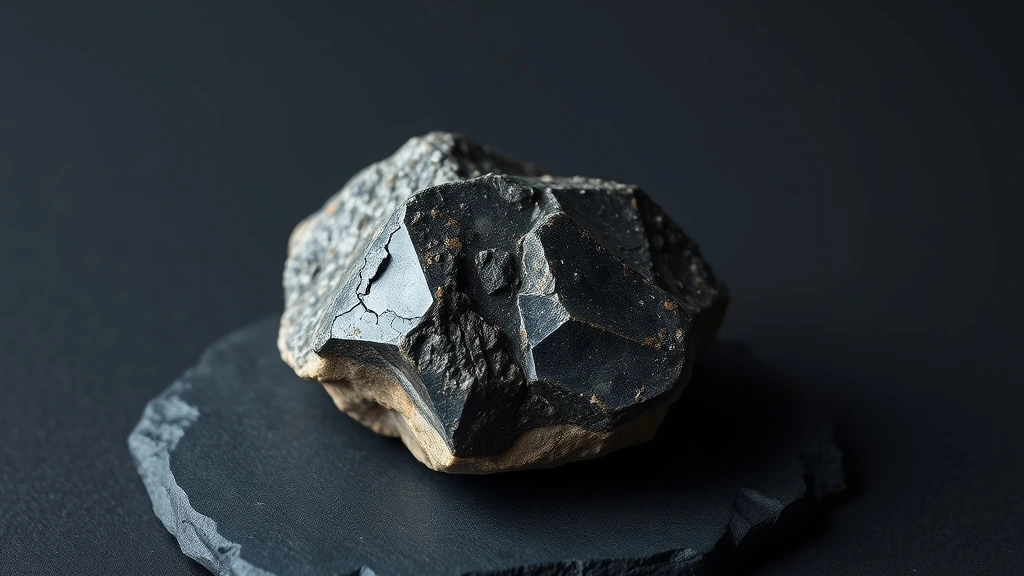
Mimetite belongs to the natural mineral family, crystallizing as a distinct hexagonal crystal system mineral rather than an aggregate or organic material. It forms in the oxidized zones of lead‑bearing ore deposits, often as a secondary replacement of galena. Its dense, lead‑rich composition (specific gravity 7.1–7.24) and vivid coloration have attracted collectors and metaphysical practitioners alike.
What is Mimetite Gemstone? Geological Overview & Definition
Mimetite is a secondary lead‑arsenate mineral that precipitates in the supergene environment of lead‑zinc sulfide deposits. It is classified within the hexagonal crystal system, producing prismatic or tabular crystals that can also appear as massive aggregates.
In gemstone form, mimetite is prized for its warm yellow‑orange to red palette, which results from trace chromophore elements. Though relatively soft, it is cut into cabochons or beads, and its high density gives a distinctive heft that collectors recognize instantly.
Mimetite Gemstone Chemical Composition & Crystallographic Properties
The ideal chemical formula Pb₅(AsO₄)₃Cl reflects a lead‑rich lattice where lead cations occupy eight‑coordinate sites. Substitutions of Ba²⁺ or Ca²⁺ for lead are common, subtly altering color and density without changing the overall hexagonal symmetry.
Mimetite’s crystal lattice is hexagonal, space group P6₃/m, with a‑axis ≈ 7.0 Å and c‑axis ≈ 16.8 Å. The structure consists of isolated arsenate tetrahedra (AsO₄)³⁻ linked to lead polyhedra, while chloride ions occupy channels parallel to the c‑axis, stabilizing the framework.
The mineral is acid‑sensitive; exposure to dilute acids can dissolve the arsenate groups, releasing lead and arsenic ions. This reactivity necessitates careful handling and storage away from acidic environments.
Color in mimetite arises from charge‑transfer transitions between lead and arsenate groups, producing its characteristic yellow‑orange hues. Upon heating above ~400 °C, the mineral may decompose, losing chloride and altering its optical properties, which is why thermal treatment is rarely applied to gemstone specimens.
| Property | Specification |
|---|---|
| Mineral Group | Natural Mineral / Crystal |
| Chemical Formula | Pb₅ (AsO₄ )₃ Cl |
| Mohs Hardness | 3.5–4 |
| Crystal System | Hexagonal crystal system |
| Specific Gravity (Density) | 7.1–7.24 |
| Refractive Index | n ω = 2.147 n ε = 2.128 |
| Color & Optical Properties | Natural Mimetite Gemstone color spectrum and optical dispersion |
| Primary Mining Localities | Global primary localities |
| Water & Chemical Resistance | High (Safe for gentle water washing) |
| Chakra Alignment (Traditional) | Root Chakra, Sacral Chakra |
| Zodiac Affinity (Traditional) | Capricorn, Virgo |
| Symbolic Meaning (Traditional) | Grounding, protection, and connection to the earth |
Mimetite Gemstone Varieties & Color Spectrum
Yellow‑Gold Mimetite
Formed in oxidized zones of lead‑zinc deposits, yellow‑gold mimetite derives its vivid hue from arsenate‑rich fluids percolating through limestone. Crystals often display minute pyromorphite inclusions, giving a subtle speckled sheen. Large, well‑formed specimens are rare, prized by collectors for their bright, buttery tone.
Orange‑Red “Fire” Mimetite
The striking orange‑red fire mimetite occurs chiefly in arid mining districts where high‑temperature hydrothermal solutions precipitate arsenate minerals. Its color results from trace chromium and iron substituting in the lattice, producing a fiery glow. Typically found as massive aggregates with a glassy luster, this variety commands premium prices due to limited global occurrences.
Green‑ish “Verdigris” Mimetite
In coastal sulfide districts, exposure to seawater induces a verdigris patina on mimetite, yielding a soft green‑blue tint. The alteration is driven by secondary copper and carbonate deposition within crystal fractures. These specimens often retain a translucent core surrounded by a thin, iridescent rim, making them highly sought after for ornamental cabochons.
Brown‑Black “Stibnite‑Stained” Mimetite
When intergrown with stibnite (antimony sulfide), mimetite adopts a deep brown‑black coloration, a hallmark of high‑temperature epithermal veins. The dense, metallic inclusions obscure the underlying yellow, creating a dramatic contrast visible under magnification. Such pieces are exceptionally scarce, prized by mineral museums for their unique juxtaposition of lead and antimony minerals.
Regional “Mexican Sun” Mimetite
Extracted from the historic mines of Zacatecas, Mexico, the Mexican Sun variety exhibits a warm, golden‑orange hue enhanced by trace copper and iron oxides. Crystals often grow in radiating clusters within dolomitic host rocks, displaying a characteristic hexagonal habit. Its limited production and vivid color make it a favorite among gemstone traders.
“Australian Desert” Mimetite
Discovered in the arid Pilbara region, the Australian Desert mimetite shows a muted, sandy‑yellow tone with occasional calcite veining. Formed in oxidized lead‑arsenate zones within sandstone, the mineral’s surface may develop a fine, powdery weathering rind. Though less vivid than other varieties, its provenance and geological context render it a collector’s curiosity.
Where is Mimetite Gemstone Found? Geological Mining & Extraction
Mimetite typically occurs in the oxidation zones of lead‑zinc sulfide deposits, where arsenate‑rich waters alter primary galena and sphalerite. It crystallizes in hexagonal habit within host rocks such as limestone, dolomite, and sandstone, often intergrown with pyromorphite, cerussite, and wulfenite.
Major extraction sites include the historic lead mines of Zacatecas, Mexico, the Mackenzie district of Australia, and the Siberian arsenic‑rich districts of Russia. Modern mining employs selective hand‑picking and low‑impact flotation techniques to preserve the delicate crystal structures prized by gemologists.
Historical Significance & Cultural Lore of Mimetite Gemstone
Ancient Romans valued mimetite for its bright yellow color, using it as a pigment in frescoes and mosaics, while early Chinese texts describe it as “earth’s gold” for protective amulets. Archaeological finds from the Mithraic temples of the 2nd century CE include carved mimetite beads, indicating its role in ritual adornment.
In esoteric traditions, mimetite is linked to the Root and Sacral Chakras, believed to ground the wearer and shield against negative energies. Folklore from the Ottoman mining towns recount that miners carried mimetite talismans for protection during deep‑shaft work, a practice that persists in modern crystal healing circles.
Modern Uses & Jewelry Applications of Mimetite Gemstone
Mimetite is chiefly a collector’s mineral, yet skilled lapidaries can transform it into striking cabochons or modestly faceted pieces. Its high refractive index (nω = 2.147, nε = 2.128) yields a brilliant, glass‑like luster when polished, making it attractive for statement pendants and cocktail rings. Because of its relatively low Mohs hardness (3.5–4), designers favor protective settings such as bezel or bezel‑back settings to guard against scratches.
- Cabochon cuts showcase the mineral’s deep orange‑yellow to brown hues.
- Faceted cuts are limited to shallow facets to preserve structural integrity.
- Ornamental carvings (e.g., mini‑sculptures, inlays) exploit mimetite’s dense, heavy feel (7.1–7.24 g/cm³).
Safety & Mineral Profile of Mimetite Gemstone
Mimetite contains lead and arsenic, so handling should be done with gloves and in a well‑ventilated area; avoid inhaling dust from cutting or polishing. The mineral is chemically stable under normal conditions but can release toxic ions if subjected to strong acids or prolonged abrasion. It is prized by collectors for scientific study and display, not for crystal‑healing practices; any historical metaphysical lore (e.g., grounding properties) is anecdotal and lacks empirical support.
Mineralogical Group and Planetary Lore of Mimetite Gemstone
Mimetite belongs to the phosphate‑arsenate group, sharing structural features with pyromorphite and vanadinite. It crystallizes in the hexagonal system, forming prismatic or tabular crystals that often exhibit a characteristic “bird‑seye” sheen due to internal strain.
In planetary symbolism, mimetite has been linked to Saturn because of its dense, grounding nature, echoing its alignment with the Root and Sacral chakras and the zodiac signs Capricorn and Virgo. While such associations appear in esoteric literature, they remain cultural narratives rather than scientific facts.
How to Identify Real vs. Fake Mimetite Gemstone
Artificial imitations of mimetite include dyed quartz, leaded glass, and resin composites that mimic its orange‑yellow hue. Synthetic glass may display a uniform, bubble‑free interior, whereas genuine mimetite often shows subtle inclusions or growth striations. Because mimetite’s density and refractive properties are distinctive, careful testing can separate authentic specimens from cheap replicas.
Practical At-Home Authenticity Tests
- Temperature Test (Thermal Feel): Real mimetite feels cool to the touch and retains that coolness longer than glass or resin, which quickly equilibrates to ambient temperature.
- Specific Gravity & Weight Test: Weigh the stone and compare its mass to its volume; a genuine piece will register a specific gravity around 7.1–7.24, noticeably heavier than most glass or quartz imitations (≈2.5–2.6).
- Scratch & Hardness Test (Mohs Comparison): Using a steel nail (hardness ~5.5) or a copper coin (hardness ~3), observe that mimetite can be scratched by the nail but not by the coin, confirming its 3.5–4 hardness range.
- Microscopic & Loupe Inspection (Internal Inclusions): Under 10×–30× magnification, authentic mimetite shows fine, irregular inclusions, growth lines, or a subtle “bird‑eye” effect, whereas synthetic glass appears uniformly clear and bubble‑free.
Mimetite Gemstone Valuation Factors, Grading & Pricing
Market valuation primarily hinges on Color Saturation, where deep, uniform reds and oranges command the highest premiums. Tone consistency across the entire specimen significantly enhances its aesthetic appeal and desirability. Additionally, high optical clarity and a distinct vitreous luster are critical for achieving top-tier grading.
The Carat Weight of a specimen directly influences its overall market value, with larger crystals fetching higher prices. Precise facet symmetry is essential for maximizing light return and visual brilliance in cut stones. However, the presence of heavy matrix or internal inclusions can reduce value by obscuring the crystal’s natural beauty.
Geographical Provenance Premium plays a vital role, with specimens from renowned locales like Mexico or China commanding higher prices. Current wholesale trends show steady demand for high-quality, well-preserved crystals in the collector market. Retail values typically reflect a significant markup over wholesale rates, depending on the seller’s expertise and certification.
How to Clean and Care for Mimetite Gemstone
Due to its moderate Mohs hardness of 3.5–4, mimetite requires gentle handling to prevent surface scratches. Always use warm soapy water and a soft cloth to remove dust and oils safely. This method effectively cleans the stone without introducing abrasive particles that could damage its delicate structure.
It is crucial to avoid ultrasonic cleaners entirely, as the vibrations can cause structural fractures in the hexagonal crystal lattice. Harsh chemical solvents should also be avoided to preserve the stone’s natural luster and integrity. Store your mimetite separately from harder gemstones to prevent accidental abrasion during daily handling.
Cleansing and Recharging Mimetite Gemstone (Energetic Care)
For energetic maintenance, utilize smoke smudging with sage or palo santo to clear stagnant energies. This dry method respects the mineral’s physical stability while aligning with its Root Chakra associations. Ensure the smoke dissipates fully before handling the stone to avoid any residue buildup on the surface.
Alternatively, place the gemstone on a selenite plate or expose it to moonlight overnight for gentle recharging. These methods avoid direct water contact, which is ideal for maintaining the stone’s chemical formula stability. Regular, brief exposure to these dry elements helps restore the crystal’s vibrational balance effectively.
Frequently Asked Questions About Mimetite Gemstone
Is mimetite safe to wear in the shower or while swimming?
Yes, mimetite tolerates gentle water exposure. Its high water resistance allows brief contact with water, but prolonged soaking should be avoided to prevent surface wear. After exposure, rinse with warm soapy water and pat dry with a soft cloth to maintain its luster.
Can I clean mimetite with an ultrasonic cleaner?
No, ultrasonic cleaning is not recommended for mimetite. The stone’s relatively soft Mohs hardness of 3.5–4 makes it vulnerable to micro‑fractures under ultrasonic vibrations. Instead, use warm soapy water and a soft cloth, gently wiping the surface to remove dirt.
What zodiac signs are associated with mimetite?
Capricorn and Virgo are the aligned zodiac signs. In astrological gem lore, mimetite is believed to reinforce the practical, earth‑grounded qualities of these signs, supporting discipline and attention to detail in daily endeavors.
Which chakras does mimetite influence?
Mimetite is linked to the Root Chakra and Sacral Chakra. These energy centers govern grounding, stability, and creative flow, making the stone popular for meditation focused on connecting with the earth and nurturing personal vitality.
How hard is mimetite compared to other gemstones?
Mimetite rates 3.5–4 on the Mohs scale. This places it softer than quartz but harder than talc, meaning it can be scratched by harder gems like sapphire. Handle it with care in jewelry settings, especially in rings or bracelets subject to impact.
What is the typical density of mimetite and why does it feel heavy?
Its density ranges from 7.1 to 7.24 g/cm³. The high lead (Pb) content in the formula Pb₅(AsO₄)₃Cl gives mimetite a noticeable weight, distinguishing it from lighter stones such as agate or fluorite.
How does mimetite’s refractive index affect its appearance?
Mimetite’s refractive indices are nω = 2.147 and nε = 2.128. These high values produce a brilliant adamantine to sub‑adamantine luster, especially when the crystal is well‑cut, enhancing its golden‑yellow to orange hues.
Is mimetite suitable for everyday jewelry?
Mimetite can be used in everyday pieces with precautions. Its moderate hardness and susceptibility to scratches mean it’s best suited for pendants, earrings, or brooches rather than high‑impact rings. Regular gentle cleaning and avoiding harsh chemicals will preserve its color and brilliance.