
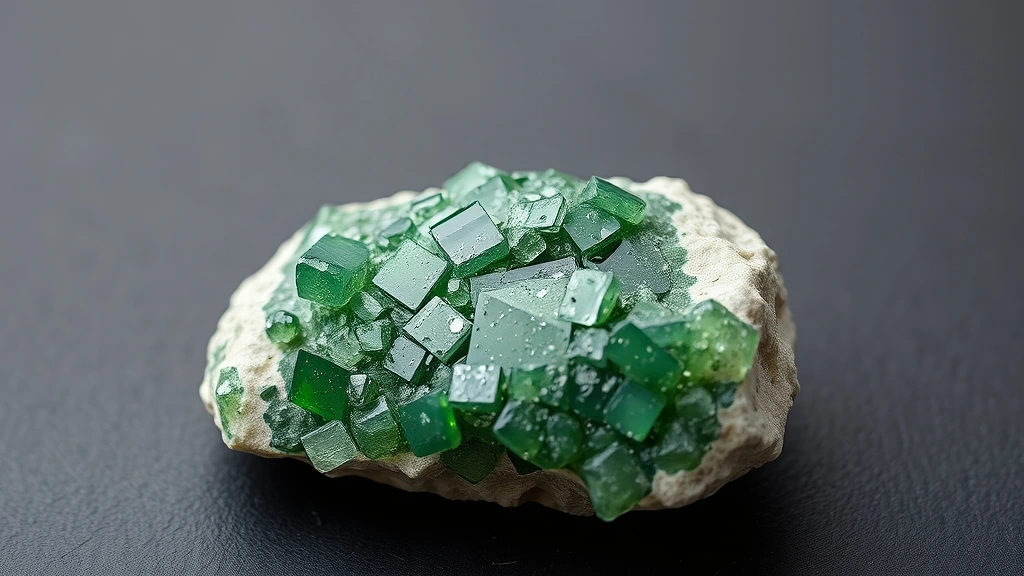
Chrome diopside belongs to the pyroxene group, a family of chain silicates that crystallize in the monoclinic system. As a natural mineral/crystal, it forms in metamorphic rocks such as skarns and amphibolites, often alongside garnet and wollastonite. The presence of chromium substitutes for iron or magnesium, producing its characteristic emerald‑like color, while its dense, vitreous habit makes it a prized gemstone in both historic and contemporary settings.
What is Chrome Diopsize Gemstone? Geological Overview & Definition
Chrome diopside is the chromium‑bearing variety of the mineral diopside, a member of the pyroxene family. It occurs as prismatic crystals or granular aggregates, typically in metamorphic environments where magnesium‑rich fluids interact with calcium‑silicate host rocks.
The stone’s emerald‑green to deep forest green coloration distinguishes it from its more common brown or colorless counterparts. Its rarity stems from the precise geochemical conditions required for chromium to replace Fe²⁺ or Mg²⁺ within the crystal lattice, a process that is limited to specific skarn and high‑grade metamorphic zones.
Chrome Diopside Gemstone Chemical Composition & Crystallographic Properties
Chrome diopside crystallizes in the monoclinic system, forming a single‑axis lattice with unequal angles (β ≈ 103.5°). The structure consists of infinite single chains of SiO₄ tetrahedra linked by Ca²⁺ and (Mg,Fe)²⁺ cations, creating the characteristic pyroxene framework.
Its chemical formula Ca(Mg,Fe)Si₂O₆ reflects a solid‑solution series where chromium (Cr³⁺) can substitute for Fe²⁺ or Mg²⁺, generating the vivid green hue. This cation substitution does not alter the overall stoichiometry but introduces chromophore color centers that absorb specific wavelengths of light.
Chrome diopside is acid‑sensitive; exposure to strong acids can leach calcium and destabilize the lattice, leading to surface etching. Consequently, cleaning should be limited to mild, pH‑neutral solutions and soft brushes to preserve its integrity.
Thermally, the mineral is stable up to about 800 °C, beyond which dehydroxylation and breakdown of the silicate chains may occur. Heat treatment can sometimes enhance color saturation, but uncontrolled heating risks creating color zoning or inducing fractures due to differential expansion within the monoclinic lattice.
| Property | Specification |
|---|---|
| Mineral Group | Natural Mineral / Crystal |
| Chemical Formula | Ca(Mg,Fe)Si₂O₆ |
| Mohs Hardness | 5.5 – 6.5 |
| Crystal System | Monoclinic |
| Specific Gravity (Density) | 3.25 – 3.40 |
| Refractive Index | 1.650 – 1.680 |
| Color & Optical Properties | Natural Chrome Diopside Gemstone color spectrum and optical dispersion |
| Primary Mining Localities | Global primary localities |
| Water & Chemical Resistance | High (Safe for gentle water washing) |
| Chakra Alignment (Traditional) | Heart Chakra |
| Zodiac Affinity (Traditional) | Taurus, Virgo |
| Symbolic Meaning (Traditional) | Emotional balance, compassion, and grounding |
Chrome Diopside Gemstone Varieties & Color Spectrum
Chrome diopside exhibits a remarkable range of green hues, driven primarily by the chromium content within its crystal lattice. The most prized specimens display a vivid, grassy green that distinguishes them from standard diopside. This coloration is not uniform but varies significantly based on geological conditions during formation.
Classic Green Chrome Diopside
This primary variety features a distinct medium to dark green body color with excellent transparency. It typically forms in metamorphic rocks where chromium-rich fluids interacted with basaltic minerals. The visual signature includes a glassy luster and occasional tiny inclusions of chrome spinel.
Pale Green Chrome Diopside
Found in lower-grade deposits, this variety presents a lighter, sage-like green tone. The lower chromium concentration results in a softer, less saturated appearance compared to classic types. It is often cut into cabochons to maximize its gentle, ethereal glow.
Deep Forest Chrome Diopside
Characterized by an intense, almost blackish-green hue, this rare morph commands high premiums. The high density of chromium ions absorbs much of the visible light spectrum. Such stones are exceptionally rare and often contain complex internal fracturing.
Zambian Chrome Diopside
Originating from the Copperbelt region, this trade variety is known for its vibrant, electric green saturation. It frequently exhibits pleochroism, showing different shades of green and yellow when viewed from various angles. This regional type is highly sought after for its brilliance and clarity.
Where is Chrome Diopside Gemstone Found? Geological Mining & Extraction
Chrome diopside primarily occurs in metamorphic schists and gneisses, often associated with chromite deposits. These rocks formed under high pressure and temperature conditions, allowing chromium to substitute for magnesium in the diopside structure. The mineral is frequently found in veins or disseminated throughout the host rock.
Major mining regions include Zambia, the United States (Colorado and Montana), and Brazil. In Zambia, extraction is often a byproduct of copper mining operations. Careful extraction is required to preserve the integrity of the fragile crystals for gem cutting.
Historical Significance & Cultural Lore of Chrome Diopside Gemstone
While not widely documented in ancient texts, chrome diopside was likely valued by pre-Columbian civilizations in the Americas. Archaeological findings suggest its use in ornamental beads and ceremonial objects. Its striking green color would have symbolized fertility and the earth’s vitality.
In modern gemology, it is appreciated for its emotional balancing properties and connection to the heart chakra. Unlike more famous gemstones, its lore is rooted in contemporary metaphysical practices rather than ancient mythology. This stone remains a niche but respected addition to the collector’s portfolio.
Modern Uses & Jewelry Applications of Chrome Diopside Gemstone
Chrome diopside is primarily valued for its intense green hue, which makes it a desirable alternative to emerald in budget-conscious jewelry markets. Lapidaries typically cut these stones into faceted gems to maximize brilliance, though high-quality material is also polished into smooth cabochons to showcase color saturation.
- Faceted Cuts: Oval, emerald, and cushion cuts are popular to enhance the stone’s natural luster.
- Cabochon Polishing: Used for beads and pendants where color uniformity is prioritized over fire.
- Ornamental Carving: Rare, large crystals are occasionally carved into decorative objects or cameos.
- Jewelry Settings: Often set in silver or gold to complement its earthy green tones.
Safety & Mineral Profile of Chrome Diopside
Safe handling and physical stability
Chrome diopside is a silicate mineral that is chemically stable under normal atmospheric conditions, but it contains trace amounts of chromium and iron that can become hazardous if the specimen is ground or powdered. Fine dust generated during cutting or polishing can be inhaled, posing a respiratory risk similar to other silicate dusts. The mineral is moderately hard (Mohs 5.5–6) and can fracture with a conchoidal break, so it should be handled with care to avoid accidental breakage. Because of its relatively soft nature and the potential for dust exposure, chrome diopside is typically treated as a collector display mineral rather than a suitable material for jewelry or functional use. The presence of chromium also means that the specimen should be stored away from strong acids or bases that could leach metal ions, which might alter its color or surface integrity.
Scientific and educational significance
Chrome diopside is an important specimen for mineralogists and educators because it exhibits a range of chromium‑induced color variations that illustrate solid‑solution series and trace‑element substitution in silicate lattices. Its crystal structure (orthorhombic, space group *Pbnm*) provides a clear example of the diopside group, and its optical properties (birefringence, pleochroism) are frequently used in teaching crystallography and optical mineralogy. In research, chrome diopside is studied for its geochemical behavior in mafic and ultramafic magmas, offering insights into the partitioning of chromium and the thermal history of igneous rocks. Museums often display chrome diopside alongside related pyroxenes to demonstrate the diversity of silicate minerals and the influence of trace elements on mineral appearance.
Mineralogical Group and Planetary Lore of Chrome Diopside
Historically, chrome diopside was first described in the late 19th century from the Bavarian region of Germany, where it was noted for its vivid green hue. Early mineralogists classified it within the broader diopside group of orthorhombic pyroxenes, emphasizing its structural similarity to the common mineral diopside while distinguishing it by its chromium content. In lapidary texts, chrome diopside has occasionally been referenced as a “green spinel” due to its color, although this is a misnomer; the mineral’s crystal habit and optical properties differ markedly from true spinels. According to early mineralogists, the mineral’s green coloration was attributed to chromium substitution, a phenomenon that later researchers confirmed through spectroscopic analysis. While no planetary symbolism has been firmly established, the mineral’s name—derived from the Greek *diopside* meaning “to shine”—reflects its lustrous appearance, a trait that has made it a favored specimen for illustrating the interplay between composition and visual character in mineral collections.
How to Identify Real vs. Fake Chrome Diopside Gemstone
Distinguishing genuine chrome diopside from imitations requires attention to optical and physical properties. Common fakes include synthetic glass, which often contains tiny bubbles, and dyed low-quality minerals that may bleed color.
Practical At-Home Authenticity Tests
- Temperature Test (Thermal Feel): Real chrome diopside feels cool to the touch initially and warms slowly, whereas plastic or glass imitations warm up much faster.
- Specific Gravity & Weight Test: Genuine stones have a density of 3.25–3.40 g/cm³, making them feel noticeably heavier than glass of the same size.
- Scratch & Hardness Test (Mohs Comparison): With a Mohs hardness of 5.5–6.5, it can scratch glass but will be scratched by a quartz point or steel file.
- Microscopic & Loupe Inspection (Internal Inclusions): Use a 10x loupe to look for natural mineral inclusions; glass imitations often show circular bubbles or swirls.
Chrome Diopside Gemstone Valuation Factors, Grading & Pricing
Color Saturation is the primary driver of value in this vibrant green gemstone. The most prized specimens exhibit a deep, vivid green hue with exceptional tone uniformity across the entire stone. High optical clarity and a strong vitreous luster further enhance the gem’s overall visual appeal and market desirability.
Carat Weight significantly influences pricing, as larger, clean stones are increasingly rare in the global market. Precise facet symmetry ensures optimal light return, maximizing the stone’s brilliance and fire. The presence of visible matrix or internal inclusions will typically reduce the final valuation of the piece.
Geographical Provenance Premium often applies to stones from renowned localities like Tanzania or Pakistan. Wholesale prices fluctuate based on supply chain stability and current retail demand trends. Buyers should always verify certification to ensure accurate grading and fair market valuation.
How to Clean and Care for Chrome Diopside Gemstone
Gently wash your chrome diopside using warm soapy water and a soft, lint-free cloth. This method effectively removes oils and dust without risking damage to the stone’s surface. Always ensure the water is lukewarm to prevent any thermal shock to the mineral structure.
It is critical to avoid ultrasonic cleaners entirely for this gemstone. The vibrations can exploit natural cleavage planes, leading to irreversible structural fractures. Store the gem separately in a soft pouch to prevent scratches from harder minerals.
Cleansing and Recharging Chrome Diopside Gemstone (Energetic Care)
For energetic maintenance, use smoke smudging with sage or palo santo to clear stagnant energy. This dry method respects the stone’s sensitivity to moisture and chemical agents. Hold the gem near the smoke for a few moments to purify its vibrational field.
Alternatively, place the stone on a selenite plate under moonlight for recharging. This gentle approach aligns with the mineral’s association with the Heart Chakra. Ensure the stone remains dry and protected from direct sunlight during this process.
Frequently Asked Questions About Chrome Diopside Gemstone
What is the chemical composition of chrome diopside?
Chrome diopside is a calcium‑magnesium‑iron silicate with the formula Ca(Mg,Fe)Si₂O₆. It belongs to the monoclinic crystal system and displays a characteristic deep green color due to trace chromium. The mineral’s density ranges from 3.25 to 3.40 g/cm³, and its refractive index falls between 1.650 and 1.680.
How hard is chrome diopside on the Mohs scale?
It rates between 5.5 and 6.5 on the Mohs hardness scale. This makes the stone moderately durable for jewelry, but it can be scratched by harder gemstones such as quartz or sapphire. Careful handling and regular polishing help maintain its glossy finish.
Is chrome diopside safe to wear in water or rain?
No – it is water‑sensitive and should not be soaked for prolonged periods. Exposure to moisture can promote surface clouding or micro‑fractures, especially in porous cuts. Wipe the stone dry with a soft cloth after brief contact with rain or splashes.
How should I clean my chrome diopside jewelry?
Clean with warm, mildly soapy water and a soft, lint‑free cloth. Avoid ultrasonic cleaners, as the vibrations can cause internal stress and lead to structural fractures in the crystal lattice. Gently rub the surface, rinse lightly, and pat dry.
Which zodiac signs are associated with chrome diopside?
The gemstone is linked to Taurus and Virgo. Both earth‑signs value stability and practicality, qualities reflected in chrome diopside’s grounding energy. Wearing the stone is believed to enhance the analytical and persevering traits typical of these signs.
Which chakra does chrome diopside balance?
It resonates with the Heart Chakra. This alignment promotes emotional balance, compassion, and a sense of inner grounding. Incorporating the stone into meditation or jewelry can help open the heart center and foster loving connections.
Can chrome diopside be used in everyday rings?
Yes, but with mindful care due to its moderate hardness. While suitable for daily wear, avoid activities that subject the ring to hard impacts or abrasive surfaces. Regular inspection for chips and prompt polishing will keep the stone looking vibrant.
Does chrome diopside exhibit any notable optical effects?
It displays a vivid, emerald‑green hue with a subtle vitreous luster. The stone’s refractive index (1.650–1.680) gives it a bright sparkle, though it lacks strong pleochroism or fluorescence. Proper cutting maximizes its color depth and overall brilliance.