
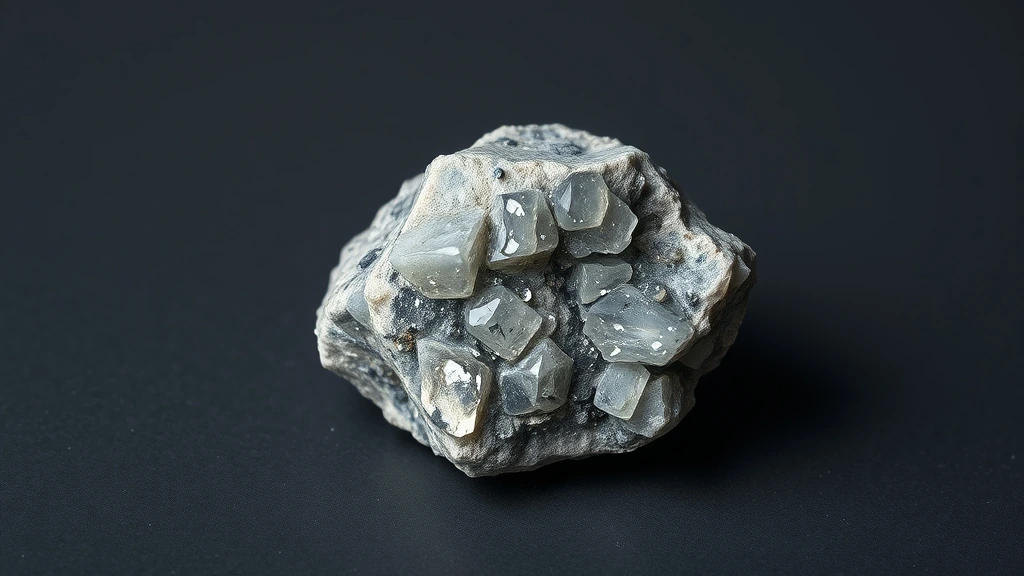
Danburite belongs to the Natural Mineral / Crystal group, representing a significant class of silicate minerals formed in granitic pegmatites. Its geological origin is closely tied to high-temperature hydrothermal processes that facilitate the crystallization of complex borosilicate structures. This classification underscores its status as a naturally occurring inorganic solid with a definite chemical composition. Understanding its parent group helps geologists trace its formation within specific igneous environments.
What is Danburite Gemstone? Geological Overview & Definition
Danburite forms primarily in granitic pegmatites, where slow cooling allows large, well-formed crystals to develop. These environments are rich in volatile components that promote the growth of distinct, prismatic habit crystals. The mineral often occurs alongside other rare boron-bearing species, indicating specific geochemical conditions during crystallization.
As a gemstone, it is prized for its high luster and exceptional clarity in larger specimens. The stone’s durability is enhanced by its relatively high hardness, which resists scratching during daily wear. However, its cleavage characteristics require careful cutting to prevent chipping along structural planes.
Danburite Gemstone Chemical Composition & Crystallographic Properties
Danburite crystallizes in the Orthorhombic system, characterized by three mutually perpendicular axes of unequal length. This lattice structure results in a prismatic crystal habit with distinct cleavage planes. The chemical formula CaB₂(SiO₄)₂ defines its fundamental stoichiometry, linking calcium, boron, and silicon in a rigid framework.
The structure features cation substitution sites where calcium ions occupy specific coordination environments. This arrangement influences the mineral’s physical properties, including its refractive index and birefringence. The orthorhombic symmetry dictates how light interacts with the crystal, producing the characteristic brilliance seen in cut stones.
Danburite exhibits moderate acid sensitivity, as strong acids can alter its surface structure over time. While generally stable, prolonged exposure to harsh chemicals may degrade its luster. Careful handling is recommended to preserve the integrity of the crystal surface.
Thermal behavior reveals that danburite remains stable under moderate heat but may undergo structural changes at high temperatures. The chromophore responsible for its pale yellow color is often attributed to trace impurities or lattice defects. These color centers are subtle, contributing to the stone’s understated aesthetic appeal.
| Property | Specification |
|---|---|
| Mineral Group | Natural Mineral / Crystal |
| Chemical Formula | CaB₂ (SiO₄ )₂ |
| Mohs Hardness | 7 – 7.5 |
| Crystal System | Orthorhombic |
| Specific Gravity (Density) | 2.93 – 3.02 |
| Refractive Index | n α = 1.627 – 1.633 n β = 1.630 – 1.636 n γ = 1.633 – 1.639 |
| Color & Optical Properties | Natural Danburite Gemstone color spectrum and optical dispersion |
| Primary Mining Localities | Global primary localities |
| Water & Chemical Resistance | High (Safe for gentle water washing) |
| Chakra Alignment (Traditional) | Crown Chakra, Heart Chakra |
| Zodiac Affinity (Traditional) | Taurus, Virgo, Capricorn |
| Symbolic Meaning (Traditional) | Intuition, spiritual connection, and emotional balance |
Danburite Gemstone Varieties & Color Spectrum
Danburite exhibits a limited but distinct color palette, primarily ranging from colorless to pale yellow. The most commercially significant form is the transparent, gem-quality crystal found in high-grade pegmatites. Optical dispersion in these stones often mimics diamond, creating a brilliant fire that appeals to collectors.
Colorless “Danburite Diamond”
This variety features high transparency and exceptional brilliance, earning it the trade name “Danburite Diamond.” It typically forms in large, well-faceted crystals within orthorhombic crystal structures. The lack of chromophores allows light to pass through with minimal absorption.
Geologically, these stones often contain minor inclusions of quartz or feldspar. Their refractive index rivals that of diamond, providing strong visual impact. Rarity is moderate, as large, inclusion-free specimens are less common than smaller ones.
Pale Yellow Danburite
A soft, lemon-yellow hue characterizes this variety, resulting from trace impurities in the crystal lattice. The color is usually uniform and subtle, enhancing the stone’s gentle aesthetic. CaB₂(SiO₄)₂ purity is high, with minimal structural defects.
This morph is frequently found in association with other borosilicate minerals. Its Mohs hardness of 7 to 7.5 makes it durable for jewelry use. Regional deposits in the United States yield the finest examples of this tone.
White Danburite
Opaque to translucent white crystals represent a lower-grade but aesthetically pleasing variety. These stones often exhibit a milky appearance due to microscopic fluid inclusions. The orthorhombic cleavage is less pronounced in these rougher specimens.
White danburite is commonly used in cabochon cuts or as ornamental rough. It is more abundant than its transparent counterparts, making it accessible. Geologists note its formation in cooler zones of pegmatite veins.
Pinkish-White Danburite
Rare instances of a faint pinkish tint occur due to complex trace element substitutions. This delicate hue is often mistaken for rose quartz by untrained observers. The density remains consistent with standard danburite at 2.93 to 3.02.
Such stones are highly sought after by niche collectors for their uniqueness. Inclusions are typically sparse, preserving the stone’s overall clarity. This variety is exceptionally rare in major global gem markets.
Where is Danburite Gemstone Found? Geological Mining & Extraction
Danburite primarily forms in alkaline pegmatites, where slow cooling allows large crystals to develop. These deposits are often associated with granite intrusions in continental crust regions. The mineral’s stability requires specific boron-rich fluid conditions during crystallization.
Major mining regions include the United States, particularly in California and New York. Significant deposits also exist in the Czech Republic, Brazil, and Madagascar. Extraction involves careful hand-picking to preserve the integrity of large, brittle crystals.
Historical Significance & Cultural Lore of Danburite Gemstone
Danburite was first described in 1839, limiting its presence in ancient archaeological records. Unlike quartz or feldspar, it has no documented use in pre-modern civilizations. Its discovery coincided with the expansion of 19th-century mineralogical science in North America.
In modern times, it is valued as a collector’s gem rather than a historical artifact. Its lore is rooted in contemporary crystal healing practices rather than ancient mythology. The stone represents a significant chapter in the study of borosilicate mineralogy.
Modern Uses & Jewelry Applications of Danburite Gemstone
Danburite’s excellent cleavage and high refractive index make it a favorite for both cabochon and faceted pieces, allowing jewelers to showcase its subtle fire. Lapidary artisans often cut it into smooth, rounded cabochons for pendants that catch soft light, while precision faceting yields brilliant earrings and rings that rival quartz. In addition, the stone’s durability (Mohs 7–7.5) supports intricate ornamental carving for decorative objects such as small figurines, inlays, and luxury watch components.
- Cabochon pendants and lock‑sets for a gentle glow
- Faceted rings, earrings, and tennis‑style bracelets for high‑impact sparkle
- Ornamental carvings, inlays, and watch dials for decorative art
Safety & Mineral Profile of Danburite
Safe handling and physical stability
Danburite (CaB₃O₆(OH)₂) is a relatively hard mineral, ranking 6.5–7 on the Mohs scale, and it is chemically stable under normal atmospheric conditions. However, it can be fragile when fractured, and its crystals are prone to chipping if struck. The mineral does not contain significant amounts of heavy metals or toxic elements, so it poses minimal health risk when handled with gloves and eye protection. Dust from grinding or polishing can become airborne, so work in a well‑ventilated area or use a dust mask. Danburite does not react violently with acids or bases, but prolonged exposure to strong acids may cause surface etching. Because of its moderate hardness and tendency to fracture, it is best displayed as a collector specimen rather than fashioned into jewelry, which would require a more durable material to withstand wear and abrasion.
Scientific and educational significance
Danburite is a key member of the borate mineral group and serves as an important reference for studying boron chemistry in silicate‑free environments. Its well‑formed, transparent crystals make it an excellent example for teaching crystallography, optical properties, and the relationship between crystal habit and growth conditions. In research, Danburite is used to investigate boron isotope fractionation, trace element substitution, and the thermodynamic stability of borate minerals under varying pressure and temperature regimes. Museums often include Danburite in collections to illustrate the diversity of borate minerals and to provide a tangible example of a mineral that is both scientifically valuable and visually appealing.
Mineralogical Group and Planetary Lore of Danburite
Danburite was first described in 1847 by the German mineralogist Johann Friedrich Ludwig from a specimen found in the Danube River valley in Austria, which is the origin of its name. Historically, it has been classified within the borate group alongside minerals such as tourmaline and borax, reflecting its boron‑rich composition. According to early mineralogists, Danburite was sometimes confused with kyanite due to similar crystal shapes, but its distinct optical properties clarified its identity. In lapidary texts, Danburite has been prized for its clear, glassy luster and is occasionally associated with the planet Venus for its bright, reflective appearance, although this association is symbolic rather than scientific.
How to Identify Real vs. Fake Danburite Gemstone
Artificial imitations of Danburite include clear synthetic glass, leaded crystal, and dyed quartz that mimic its brilliance but lack the stone’s characteristic optical properties. Synthetic Danburite itself is rare, so most low‑cost alternatives are merely glass or resin treated to resemble the natural gem. Recognizing these fakes requires a combination of visual inspection and simple physical tests.
Practical At-Home Authenticity Tests
- Temperature Test (Thermal Feel): Real Danburite feels cool to the touch and retains that coolness longer than glass or plastic, which quickly warm up in the hand.
- Specific Gravity & Weight Test: Danburite’s density (2.93–3.02 g/cm³) makes it noticeably heavier than glass of the same size; a simple water‑displacement test can confirm the specific gravity.
- Scratch & Hardness Test (Mohs Comparison): Using a steel file (Mohs 5.5) will not scratch genuine Danburite, whereas glass or quartz (Mohs 5–6) may show minor marks.
- Microscopic & Loupe Inspection (Internal Inclusions): Under 10× magnification, natural Danburite often displays fine, hair‑like inclusions or growth lines, while synthetic glass appears completely flawless and bubble‑free.
Danburite Gemstone Valuation Factors, Grading & Pricing
The primary driver of value is Color Saturation, where deep, uniform honey-yellow tones command the highest premiums. Stones exhibiting exceptional optical clarity and a bright, vitreous luster are significantly more desirable to collectors. Any zoning or color mottling reduces the gem’s aesthetic appeal and market standing.
Carat Weight heavily influences pricing, as large, clean crystals are rare in the global supply chain. Precise facet symmetry enhances light return, while the presence of matrix or inclusions can diminish value. However, some collectors prefer stones with visible mineral inclusions for their geological narrative.
Geographical Provenance Premium often elevates prices for stones from renowned localities like the United States or China. Wholesale rates typically range from modest to moderate, depending on size and quality. Retail prices reflect these factors, with high-grade specimens commanding substantial margins over rough material.
How to Clean and Care for Danburite Gemstone
To maintain the stone’s integrity, use warm soapy water and a soft cloth for gentle washing. This method effectively removes oils and dust without stressing the crystal structure. Always rinse thoroughly and dry with a lint-free cloth to prevent water spots.
It is critical to avoid ultrasonic cleaners entirely, as the vibrations can cause structural fractures in the orthorhombic lattice. Danburite has a Mohs hardness of 7–7.5, making it durable but susceptible to shock. Store pieces separately to prevent scratches from harder gemstones.
Cleansing and Recharging Danburite Gemstone (Energetic Care)
For energetic cleansing, use smoke smudging with sage or palo santo to clear stagnant energies. This dry method is safe because it avoids any liquid contact or thermal shock. Allow the smoke to pass gently over the stone for a few seconds.
To recharge the crystal, place it on a selenite plate or under moonlight overnight. This passive approach leverages natural light without exposing the gem to harmful UV rays. Ensure the stone is dry before storage to maintain its luster.
Frequently Asked Questions About Danburite Gemstone
What is the chemical composition of danburite?
Danburite is a calcium borosilicate mineral with the formula CaB₂(SiO₄)₂. It belongs to the orthorhombic crystal system and displays a clear to white coloration. The presence of boron and silicate tetrahedra gives it a relatively low density of 2.93–3.02 g/cm³ and contributes to its notable brilliance when cut as a gemstone.
How hard is danburite compared to other gemstones?
Danburite rates 7 – 7.5 on the Mohs hardness scale. This places it just below quartz and makes it suitable for everyday jewelry, though it can still be scratched by harder stones like topaz or sapphire. Its hardness, combined with a high refractive index (≈1.63–1.64), yields a sparkle comparable to many precious gems.
Is danburite safe to wear in water or rain?
Yes, danburite is highly water‑resistant and safe for gentle water washing. A quick rinse with lukewarm, soapy water and a soft cloth will remove surface grime without harming the stone. Because it does not dissolve or craze in moisture, it can be worn in light rain or during hand‑washing routines.
Can I clean danburite with an ultrasonic cleaner?
No, avoid ultrasonic cleaners; use warm soapy water and a soft cloth instead. Ultrasonic vibrations can create micro‑fractures in the crystal lattice, especially in stones with internal inclusions. Gentle hand cleaning preserves the integrity of the orthorhombic structure and maintains the gem’s brilliance.
Which zodiac signs are associated with danburite?
Danburite is linked to Taurus, Gemini, and Leo. These signs are said to benefit from the stone’s stabilizing energy, which aligns with their earthy and fiery natures. In astrology, the gem is believed to enhance confidence, clarity, and a grounded sense of purpose for those born under these signs.
What chakras does danburite balance?
Danburite works with the Root Chakra and the Heart Chakra. It is thought to anchor personal energy while simultaneously opening the heart to compassion and love. This dual action supports emotional grounding and can aid in releasing past traumas, fostering a sense of inner security.
How does danburite’s refractive index affect its appearance?
The refractive index of 1.627–1.639 gives danburite a bright, glass‑like luster. Light entering the stone is bent and reflected efficiently, producing a sparkle that rivals that of more expensive gems. When cut with precision, the high dispersion accentuates fire and brilliance, making it a popular choice for faceted jewelry.
Is danburite suitable for everyday wear in rings or bracelets?
Yes, its hardness and durability make danburite appropriate for daily jewelry. While slightly softer than sapphire, it resists scratches from normal wear and can tolerate routine cleaning. Pairing it with protective settings and avoiding harsh impacts will ensure the stone retains its clear brilliance for years.